
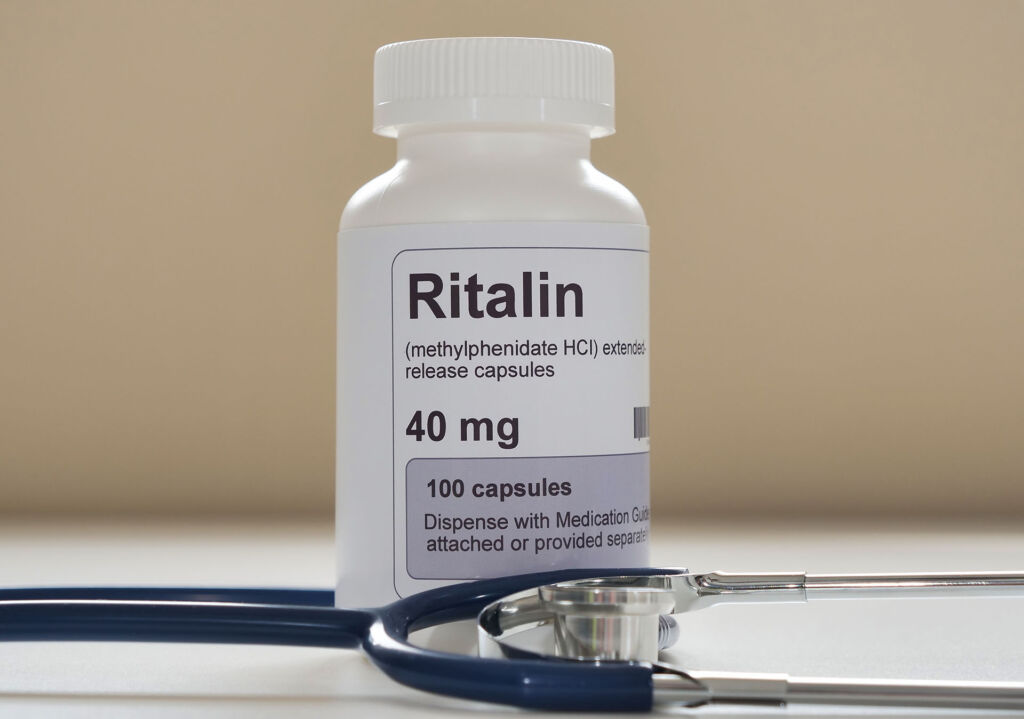
Can you take Ritalin and Vyvanse together? Taking Ritalin and Vyvanse together is not standard first-line ADHD practice — but it is a recognised, evidence-supported clinical strategy in specific contexts, and combining them is neither universally contraindicated nor pharmacologically reckless when done under appropriate medical supervision. The most common legitimate use is a morning Vyvanse dose supplemented by an afternoon immediate-release methylphenidate (Ritalin IR) booster to extend coverage into the evening — a pattern explicitly discussed in the clinical pharmacology literature and used by prescribers managing patients with inadequate all-day symptom control from a single medication. However, taking both medications simultaneously at full doses without clinical oversight carries genuine risks of compounded cardiovascular strain, overstimulation, and cumulative CNS toxicity.
Why This Combination Is Even Considered
To understand when and why this combination is clinically used, the pharmacological reasoning must be clear:
Vyvanse and Ritalin are from different drug classes:Vyvanse (lisdexamfetamine) is an amphetamine prodrug — its active form dextroamphetamine works by both forcing dopamine/norepinephrine release via reverse transporter action AND blocking their reuptake. Ritalin (methylphenidate) works exclusively through reuptake blockade at the dopamine transporter (DAT) and norepinephrine transporter (NET) — it does not force release. These are pharmacologically distinct mechanisms, which is why combining them is not identical to doubling a dose of the same medication.
The coverage gap problem:Vyvanse’s 10–14 hour duration is often cited as its primary advantage — but many patients, particularly children with evening homework demands, working adults with long days, and parents who need to be functional at dinner and bedtime, need effective coverage beyond the window that even Vyvanse provides when taken in the early morning. When Vyvanse wears off, the re-emergence of ADHD symptoms can be abrupt and disruptive — this is the specific clinical gap that an afternoon Ritalin booster is designed to address.
The Evidence Base: What Clinical Research and Guidelines Say
AAP 2019 Guidelines on Combination Coverage
The American Academy of Pediatrics 2019 ADHD guidelines — the most widely cited paediatric ADHD treatment guidelines — explicitly state that optimal medication management “may necessitate multiple medications to achieve maximum symptom control without adverse effects”and emphasise the importance of systematic dose titration across the full day. This provides the conceptual framework — though not a specific endorsement of Vyvanse + Ritalin — for considering combination approaches when single-agent therapy fails to cover all necessary hours.
The 4 PM Methylphenidate Study
A controlled clinical study specifically examined the addition of a 4 PM methylphenidate doseto children’s established long-acting stimulant regimens and found: “Methylphenidate administered at 4 PM resulted in markedly improved behavioural control with no adverse effects on sleep latency”. This is direct evidence that a targeted afternoon methylphenidate booster can extend effective coverage into the evening without causing insomnia — provided timing is managed appropriately.
Combination Therapy Review Literature
A systematic review of combination pharmacotherapy in ADHD (PMC, 2012) established that combining different pharmacological classes — particularly stimulants with alpha-2 agonists, and in some cases dual stimulant therapy — is a clinically recognised escalation step for treatment-refractory or partially responding patients. The review concluded that combination strategies have evidence of greater efficacy than dose escalation of a single agent in certain patient populations.
The Pharmacological Complementarity Argument
A 2022 Frontiers in Pharmacology molecular characterisation study of stimulant mechanisms confirmed that amphetamines and methylphenidate have “distinct pharmacodynamic profiles despite both being dopamine/norepinephrine reuptake inhibitors”. The combination theoretically provides complementary dopaminergic stimulation — forced release (amphetamine) plus extended reuptake inhibition (methylphenidate) — which may explain why some patients experience additive benefits rather than simple duplication of effect.
When Combining Ritalin and Vyvanse Is Clinically Appropriate
The legitimate clinical contexts for this combination are specific and distinct from casual concurrent use:
Scenario 1: The Evening/Afternoon Coverage Booster (Most Common)
This is the most evidence-supported use case:
- Patient takes Vyvanse in the morning (e.g., 50–70 mg)
- Vyvanse covers the core working/school day — 10–13 hours from morning dose
- ADHD symptoms return in the late afternoon/evening — homework, driving, parenting, social functioning
- Low-dose Ritalin IR (5–10 mg) at approximately 3–5 PM provides targeted evening coverage
- The methylphenidate is timed to clear before bedtime, avoiding sleep disruption
- This specific combination pattern is explicitly described as “appropriate and evidence-supported” in clinical pharmacology guidance
The key principle: Vyvanse and Ritalin IR are not competing here — they are performing coverage of different time windows. The Ritalin is not adding to the Vyvanse while it is still active; it is filling the gap after the Vyvanse has worn off.
Scenario 2: The Rapid Onset Morning “Bridge”
A less common but pharmacologically logical use:
- Vyvanse’s 1–2 hour onset means patients have a “dead zone” after waking before medication activates
- A small Ritalin IR dose (5–10 mg) on waking provides rapid dopamine support within 30–45 minutes
- Vyvanse then activates 1–2 hours later and carries coverage through the day
- The morning Ritalin dose is designed to “bridge” the gap before Vyvanse peaks, not to augment Vyvanse at full activity
Scenario 3: Inadequate Response to Either Medication Alone
For patients who trialled Vyvanse alone and methylphenidate alone with partial responses to each, a prescriber may determine that the distinct mechanisms provide additive benefit at lower individual doses. This is the most complex use case, requires the most careful dose management, and should be reserved for psychiatrist-level prescribing rather than GP management.
When Combining Ritalin and Vyvanse Is NOT Appropriate
The combination is inappropriate and potentially harmful in the following circumstances:
- Taking both medications simultaneously at full therapeutic doses — this doubles the total stimulant burden and compounds all side effects additively
- Self-medicating with a second stimulant without prescriber knowledge — combining stimulants outside medical supervision is dangerous and constitutes misuse of Schedule 8 medications
- In patients with cardiovascular disease, hypertension, or arrhythmias — cumulative cardiovascular effects of two stimulants simultaneously require careful clinical assessment
- In patients with a history of psychosis or mania — both medications have psychosis risk; combining them increases total dopaminergic stimulation
- In patients with severe insomnia — combination therapy extending stimulant activity into the evening may significantly worsen sleep unless timing is precisely managed
- Without monitoring — any dual-stimulant regimen requires regular clinical review of cardiovascular parameters, weight, sleep, and psychiatric symptoms
The Pharmacological Interaction: What Actually Happens
Understanding the actual pharmacological interaction between the two medications is essential for assessing the risk:
Mechanism Overlap
Both medications act on the dopamine transporter (DAT) and norepinephrine transporter (NET) — Vyvanse through forced release and reuptake blockade; Ritalin through reuptake blockade only. When both are present in the system simultaneously:
- At the DAT: Both medications are competing for binding — Vyvanse/dextroamphetamine causes reverse transport; methylphenidate competitively inhibits forward transport. The net effect is additive — more dopamine in the synapse than either alone
- At the NET: Similarly additive norepinephrine elevation — more peripheral and central norepinephrine than either alone
- The “counteract each other” claim made in some patient communities is pharmacologically incorrect — they do not counteract each other. They target the same transporters with different but additive mechanisms. A patient on Reddit states “they both act on the DAT receptor” and concludes they cancel out, but the pharmacology literature confirms this is wrong — both simultaneously increase synaptic dopamine, they do not neutralise each other’s effects
What This Means for Side Effects
Additive dopamine and norepinephrine elevation produces additive side effect potential:
- Cardiovascular: Higher combined heart rate and blood pressure elevation than either medication alone
- Appetite: Compounded appetite suppression throughout the medicated window
- Sleep: If both medications are active simultaneously near bedtime, significantly increased insomnia risk
- Anxiety/overstimulation: Additive CNS stimulation — some patients find the overlap window excessively stimulating
- Psychosis risk: Combined dopaminergic stimulation is additive; the risk at overlap periods is higher than for either medication alone
The Saturation Point Phenomenon
There is a pharmacological ceiling to DAT occupancy — once the transporter is effectively saturated by one medication, adding a second produces diminishing additional CNS effect but continues to add peripheral cardiovascular and other side effects. This is why some patients in patient communities report that combining the two medications produces less additional benefit than expected — the CNS DAT sites are already substantially occupied by Vyvanse at full dose, and adding methylphenidate then primarily adds peripheral cardiovascular load rather than further improving executive function.
The eHealthMe Real-World Data
The eHealthMe Phase IV clinical study database — which analyses FDA adverse event reporting data from real-world use — has collected reports from 750 people who took both Vyvanse and Ritalin concurrently:
- The most commonly reported concurrent adverse effects include: decreased appetite, insomnia, mood swings, headache, and elevated heart rate
- The data confirms that real-world concurrent use does occur and is being monitored clinically — the adverse event profile is consistent with additive stimulant effects
- This real-world data does not represent prescribed therapeutic combination therapy; it includes all concurrent use including accidental overlap, self-medication, and off-label prescribing
The Australian Prescribing Context
The Australian regulatory and prescribing context introduces specific constraints that Australian patients need to understand:
- Both Vyvanse and Ritalin are Schedule 8 in all Australian states and territories — dual Schedule 8 prescribing is not prohibited, but requires clear clinical justification and careful documentation
- The Reddit r/ausadhd community specifically discusses this question, with one patient noting: “I’m planning to start Ritalin in the morning for quick action and then take Vyvanse around lunch to cover the rest of the day” — this reverse-order approach (Ritalin for fast onset, Vyvanse for sustained coverage) is a variation of the booster strategy
- Medicare/PBS restrictions on dual stimulant prescribing exist in some Australian contexts — as noted in the r/ausadhd community: “Medicare also disapproves of taking two Vyvanse tablets a day”; dual stimulant prescriptions may require additional clinical justification for PBS subsidy
- Australian GPs managing complex ADHD cases with a dual stimulant approach should ideally involve a psychiatrist in the clinical decision — this falls outside standard first-line GP ADHD management and into specialist territory
- Dexamphetamine IR is the more common Australian “booster” choice rather than Ritalin, because it shares Vyvanse’s amphetamine pharmacological class and provides a more predictable dose extension — but methylphenidate (Ritalin) remains a valid pharmacologically complementary option
The Clinical Implementation Protocol
For patients and prescribers considering an afternoon Ritalin booster with morning Vyvanse — the most evidence-supported combination scenario:
Step 1: Optimise the Vyvanse dose first
- Titrate Vyvanse to its optimal dose (up to 70 mg maximum) before adding any second medication
- Many patients who report “Vyvanse wearing off” are on a suboptimal Vyvanse dose, not a dose that requires supplementation
- Assess symptom control throughout the entire day before concluding that supplemental coverage is needed
Step 2: Identify and document the specific coverage gap
- Note exactly what time of day symptoms return and what functional impairment results
- This precision is important for timing the Ritalin booster appropriately
- Document whether the gap is consistent across days or varies with dose timing and food intake
Step 3: Start low with the afternoon methylphenidate
- Begin at 5 mg Ritalin IR — the lowest available dose
- Administer 3–5 hours before desired sleep time — not at the time of symptom recurrence if that is late evening
- The 4 PM methylphenidate study used a 4 PM dose and found no sleep disruption at this timing
- Do not take the Ritalin while Vyvanse is still at peak activity — time it to the Vyvanse wear-off window
Step 4: Titrate carefully and monitor
- Increase in 5 mg increments over several weeks based on symptom control and tolerability
- Monitor sleep latency and quality — this is the primary dose-limiting concern
- Monitor heart rate, blood pressure, appetite and weight at each review
- Keep the prescriber informed of all changes — do not self-adjust a dual stimulant regimen
What Cannot Be Combined with Either Medication
Before considering Ritalin and Vyvanse together, it is critical to understand the absolute contraindications that apply to both:
- MAO inhibitors (MAOIs) — combining any stimulant with an MAOI is a potentially life-threatening interaction producing hypertensive crisis; allow at least 14 days washout after stopping an MAOI before starting either medication
- Other CNS stimulants — adding a third stimulant to a Vyvanse + Ritalin combination is not clinically justified and carries compounded risk
- Cocaine or illicit stimulants — self-evidently dangerous in combination with either medication
- High-dose caffeine — not an absolute contraindication, but high caffeine intake (>400 mg/day) in combination with two stimulants produces additive cardiovascular strain; this should be discussed with the prescriber
Safety and Important Considerations for Australian Adults
- Do not combine Vyvanse and Ritalin without explicit prescriber knowledge and approval — both are Schedule 8 medications, and taking both simultaneously without medical oversight is both potentially dangerous and legally problematic
- The “booster” strategy using dexamphetamine IR is more commonly employed in Australian practice than a methylphenidate booster, because it maintains pharmacological class consistency; however, methylphenidate’s distinct mechanism provides theoretical complementarity
- Cardiac monitoring — any patient on dual stimulant therapy should have their blood pressure and heart rate measured at regular (at minimum 3-monthly) review appointments, as the additive cardiovascular burden is a documented concern
- Driving assessment — Schedule 8 medications individually require consideration of fitness to drive; dual stimulant therapy adds complexity, particularly during the overlap window where combined stimulant effects are highest
Common Misconceptions About Taking Ritalin and Vyvanse Together
Myth 1: “Ritalin and Vyvanse cancel each other out.”This is pharmacologically incorrect. Both medications act on the dopamine and norepinephrine transporters in the same direction — both increase synaptic dopamine. They do not antagonise each other. The mechanism differs (forced release vs. reuptake blockade), but the direction of the neurochemical effect is the same — additive, not opposing.
Myth 2: “Taking both together is always dangerous.”The evidence does not support an absolute contraindication — the combination is explicitly described as “appropriate and evidence-supported” in specific clinical contexts, particularly the afternoon booster strategy. The danger lies in unmanaged simultaneous full-dose use, not in the combination per se.
Myth 3: “If one stimulant doesn’t work well, adding another will always help.”At full DAT occupancy from Vyvanse, adding methylphenidate produces diminishing CNS benefit while adding cardiovascular and peripheral side effects. The combination only adds meaningful CNS benefit when it is targeting a genuine coverage gap that the primary medication cannot address — not when both are active simultaneously in an attempt to amplify an insufficient therapeutic response.
Myth 4: “My prescriber won’t know if I take Ritalin and Vyvanse together.”Both are Schedule 8 medications with dispensing records in the real-time prescription monitoring systems active in all Australian states. Concurrent dispensing of two Schedule 8 stimulants is visible to prescribers and pharmacists through these systems — and is one of the triggers for pharmacist clinical review.
Can you take Ritalin and Vyvanse together Hobart
Can you take Ritalin and Vyvanse together Devonport
Can you take Ritalin and Vyvanse together Launceston
Can you take Ritalin and Vyvanse together Tasmania
Can you take Ritalin and Vyvanse together Victoria
Can you take Ritalin and Vyvanse together Queensland
Can you take Ritalin and Vyvanse together Canberra
Can you take Ritalin and Vyvanse together Australian Capital Territory
Can you take Ritalin and Vyvanse together South Australia
Can you take Ritalin and Vyvanse together New South Wales
Can you take Ritalin and Vyvanse together Darwin
Can you take Ritalin and Vyvanse together Ghan
Can you take Ritalin and Vyvanse together Northern Territory
Can you take Ritalin and Vyvanse together Australia
Can you take Ritalin and Vyvanse together Austria
Can you take Ritalin and Vyvanse together Germany
Can you take Ritalin and Vyvanse together United Kingdom
Can you take Ritalin and Vyvanse together Sweden
Can you take Ritalin and Vyvanse together Denmark
Can you take Ritalin and Vyvanse together Norway
Can you take Ritalin and Vyvanse together Finland
Can you take Ritalin and Vyvanse together Iceland
Can you take Ritalin and Vyvanse together Netherlands
Can you take Ritalin and Vyvanse together Spain
Can you take Ritalin and Vyvanse together Ireland
Can you take Ritalin and Vyvanse together Switzerland
FAQ: People Also Ask About Taking Ritalin and Vyvanse Together
Can you take Ritalin and Vyvanse together?Yes — in specific clinically supervised contexts. The most evidence-supported use is a morning Vyvanse dose (for all-day coverage) supplemented by a low-dose afternoon Ritalin IR (5–10 mg) to extend coverage into the evening. This is explicitly described in ADHD clinical pharmacology guidance as appropriate when optimised single-agent therapy fails to provide adequate all-day symptom control. Taking both simultaneously at full therapeutic doses without clinical oversight is not recommended and carries compounded side effect risk.
What happens if you take Ritalin and Vyvanse at the same time?Both medications simultaneously increase synaptic dopamine and norepinephrine through additive mechanisms — they do not cancel each other out. The combined effect produces greater total dopaminergic and noradrenergic stimulation than either alone, with proportionally greater cardiovascular effects (higher heart rate and blood pressure), appetite suppression, potential anxiety, and insomnia risk. At full therapeutic doses of both simultaneously, the cardiovascular strain is a primary safety concern.
Is it safe to take Ritalin and Vyvanse together?Safety depends entirely on context. Under proper prescriber supervision, with appropriate dosing and timing (particularly the afternoon booster strategy), the combination is considered safe enough to be clinically employed. Without supervision, at simultaneous full therapeutic doses, or in patients with cardiovascular risk factors or psychiatric comorbidities, the combination carries meaningful and compounded risks. This is not a combination to self-initiate.
Why would a doctor prescribe both Ritalin and Vyvanse?The most common clinical rationale is an afternoon coverage gap — Vyvanse provides core daytime coverage but ADHD symptoms return in the evening, affecting homework, family function, or driving. A low-dose afternoon Ritalin IR booster addresses this gap without requiring a second Vyvanse dose (which would cause insomnia) or extending to a second full-strength amphetamine dose. Additional rationales include: leveraging the faster onset of methylphenidate for morning bridging before Vyvanse activates; or using the pharmacologically complementary mechanisms for patients who had partial responses to each medication individually.
Does combining Ritalin and Vyvanse cause more side effects?Yes — additively. The eHealthMe real-world data from 750 concurrent users confirms a side effect profile consistent with compounded stimulant effects. The most clinically significant concerns are cardiovascular (elevated heart rate and blood pressure), insomnia (if the Ritalin dose is timed too late), and appetite suppression (both medications suppress appetite, potentially creating nutritional deficiency when combined). The severity depends heavily on dose, timing, and individual cardiovascular and psychiatric risk factors.
Is Ritalin and Vyvanse together common in Australia?It is not standard first-line practice, but it is used in Australian clinical practice, particularly the Ritalin (or more commonly dexamphetamine IR) afternoon booster strategy. The r/ausadhd community documents both patient experience with this approach and the regulatory context, including PBS restrictions that may limit dual Schedule 8 stimulant prescribing under standard subsidy pathways. Any dual stimulant approach in Australia should involve a psychiatrist, not GP management alone.
