
Neither Vyvanse nor Ritalin is universally better — the right answer is determined by who you are, not which medication scores higher on a single metric. That said, the evidence is not a coin flip: the 2018 Lancet Psychiatry meta-analysis of 133 randomised controlled trials — the most authoritative ADHD medication study ever conducted — found that amphetamines (including Vyvanse) are the preferred first-choice medication for adults, while methylphenidate (Ritalin) is the preferred first choice for children and adolescents. Vyvanse has the larger effect size on ADHD symptoms in adults; Ritalin has the better tolerability profile in younger patients. “Better” is a clinical context question, not a pharmacological one.
Why There Is No Single “Better” Answer
The reason this question deserves a more nuanced answer than most medication comparison articles provide is that ADHD is heterogeneous, patients are different, and “better” involves dimensions beyond raw symptom reduction:
The dimensions of “better” in ADHD pharmacotherapy:
- Symptom reduction magnitude — by which Vyvanse has a larger population-level effect in adults
- Duration of coverage — by which Vyvanse is clearly superior at 10–14 hours vs Ritalin IR’s 3–5 hours
- Tolerability and side effect burden — by which methylphenidate has a measurably better profile across both age groups
- Safety in patients with psychiatric comorbidities — by which Ritalin/methylphenidate is substantially safer, with no significant dose-dependent psychosis risk
- Convenience — by which Vyvanse’s once-daily dosing is meaningfully better for daily life management
- Cost — by which generic methylphenidate is substantially less expensive than branded Vyvanse
- Individual neurobiological response — which is genuinely unpredictable from population-level data
A medication that wins on effect size but is intolerable, unaffordable, or unsafe for a specific patient is not “better” for that patient.
When Vyvanse Is Better
Vyvanse is the stronger evidence-based choice in specific circumstances:
For Adults with ADHD
The Lancet meta-analysis explicitly recommends amphetamines — including Vyvanse — as preferred first-line treatment for adult ADHD. Adults generally tolerate the stronger dopaminergic effect better than children, and the larger effect size translates to more meaningful symptom control for many adults who need robust coverage across a full working day. The head-to-head trial showed a -5.6 point ADHD-RS-IV advantage for lisdexamfetamine versus osmotic-release methylphenidate — a clinically meaningful margin.
For All-Day Coverage Without Re-Dosing
Vyvanse’s 10–14 hour duration from a single morning dose is a major practical advantage for adults whose ADHD impacts work performance through the afternoon, evening driving, parenting responsibilities, and social functioning. Having to remember and arrange a midday Ritalin dose — at work, in a meeting, at a school that requires nurse dispensing — is a real-world compliance barrier that Vyvanse’s once-daily design eliminates entirely.
For Patients Who Have Had a Suboptimal Response to Methylphenidate
The clinical evidence specifically supports amphetamines as the evidence-based next step when methylphenidate provides insufficient benefit. A study found that patients who had responded inadequately to methylphenidate showed “faster and more robust treatment response” to lisdexamfetamine than to atomoxetine as the next step. If Ritalin hasn’t worked well enough, Vyvanse is the evidence-based escalation.
For Patients with Binge Eating Disorder
Vyvanse is the only medication in this comparison approved for moderate-to-severe BED — the FDA-approved indication is unique to lisdexamfetamine. In patients with both ADHD and BED, Vyvanse addresses both conditions simultaneously.
When Diversion or Misuse Risk Is a Specific Concern
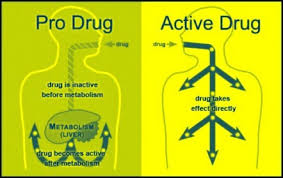
Vyvanse’s prodrug design makes it pharmacologically resistant to misuse — crushing, snorting, or injecting does not produce a faster or more intense effect than taking it orally. For patients with a personal or family substance use history where diversion risk is a clinical consideration, this pharmacological abuse-deterrent property is a meaningful advantage.
When Ritalin Is Better
Ritalin — or more precisely, methylphenidate — is the better choice in specific circumstances:
For Children and Adolescents
The Lancet meta-analysis is explicit: methylphenidate is the preferred first-line medication for children and adolescents. The tolerability advantage is substantial — children taking amphetamines are more than twice as likely to discontinue due to side effects as children taking methylphenidate (odds ratio 2.30). A child experiencing intolerable anxiety, emotional blunting, or appetite suppression that stops them eating entirely is not well served by the medication’s larger effect size.
For Patients with Personal or Family History of Psychosis or Bipolar Disorder
This is the most clinically critical scenario where methylphenidate’s safety profile is decisively better. Amphetamines carry approximately double the psychosis risk of methylphenidate, and the 2024 American Journal of Psychiatry study found no significant dose-dependent psychosis risk for methylphenidate — unlike the robust dose-response relationship found for amphetamines. For patients with any personal or family psychiatric history involving psychosis, mania, or bipolar disorder, methylphenidate is categorically the safer choice.
When Shorter Coverage Is Desirable
Ritalin’s 3–5 hour window is occasionally advantageous — for patients who only want coverage during specific windows (morning school hours, the work day only), who cannot tolerate late-evening alertness from a 12-hour medication, or who need more precise control over their medicated and unmedicated states. For an adult who takes medication only on workdays and wants to feel fully unmedicated in the evenings and weekends, Ritalin IR provides this granularity.
When Cost Is a Significant Factor
Generic methylphenidate is dramatically less expensive than branded Vyvanse — roughly $19 versus $390 in US cash pricing for equivalent monthly supply. In Australia, both are PBS-listed for eligible patients, but private costs and access details matter for patients not meeting PBS criteria. Where cost is a genuine barrier to consistent adherence, methylphenidate’s substantially lower price is a real-world advantage that translates into better actual treatment outcomes.
When the Patient Tolerates Methylphenidate Well and Is Adequately Controlled
If a patient is doing well on Ritalin or Concerta — good symptom control, acceptable tolerability — there is no evidence-based reason to switch to Vyvanse. The principle of not changing an effective and tolerated treatment applies directly here.
The “Better” Answer at Each Life Stage
Because the Lancet evidence is explicitly age-stratified, the most concise evidence-based answer is:
The 7 Most Important Decision Factors
For the person currently weighing these two medications with their prescriber, these are the factors that most meaningfully differentiate outcomes:
1. Your age:The single most evidence-guided factor — methylphenidate first for under-18s, amphetamines preferred for adults.
2. How long you need coverage:If you need 3–5 hours: Ritalin IR is sufficient and cleaner. If you need 10–14 hours across a full working day: Vyvanse’s single dose is a practical game-changer.
3. Your psychiatric history:Any personal or family history of psychosis, bipolar disorder, or mania — choose methylphenidate.
4. Your previous medication response:Previously tried methylphenidate with good but inadequate response? The evidence specifically supports lisdexamfetamine as the next step.
5. Cost and access:If cost is a genuine barrier to adherence, generic methylphenidate is significantly more affordable.
6. Your lifestyle and daily structure:Multiple daily doses are workable for some patients and practically impossible for others — be honest with yourself and your prescriber about which category you fall into.
7. Individual biology:No prescriber or meta-analysis can predict your specific response in advance — and ADHD neurobiologies are heterogeneous. Some patients who statistically “should” do better on Vyvanse respond remarkably well to methylphenidate, and vice versa. Systematic titration and honest clinical review often matter more than the initial choice.
The Patient Experience Dimension: What Australian Adults Say
The Australian ADHD community on Reddit provides a rich real-world perspective that complements the clinical evidence:
The most consistent themes in Australian patient experience comparisons:
- Vyvanse is frequently described as “smoother” — fewer peaks and troughs, a more gradual onset, and a gentler offset compared to the Ritalin IR experience of clear “on” and “off” states
- Ritalin IR gives more control — patients who want to take medication only situationally, or who want to be clearly unmedicated by afternoon, value the shorter window
- Concerta (extended-release methylphenidate) is often the more direct Vyvanse comparator — not Ritalin IR — because it also provides all-day coverage; many patients switching from Ritalin IR to Concerta find the step-up in smoothness alone is significant before considering amphetamines
- The “Vyvanse crash” is commonly mentioned — the late-afternoon emotional dip some patients experience as Vyvanse wears off is more pronounced for some than the Ritalin fadeout
- Cost under PBS is frequently cited as the deciding practical factor when both medications produce adequate clinical control — with generic methylphenidate significantly more accessible for patients facing financial constraints
The Right Question to Ask Your Prescriber
Rather than arriving at the prescriber appointment asking “Is Vyvanse better than Ritalin?”, the more productive clinical questions are:
- “Based on my age, symptoms, and medical history, which medication class does the evidence favour for me?”
- “If I’ve already tried methylphenidate, what response would suggest trying an amphetamine next?”
- “If I have [specific risk factor], does that change the first-line recommendation?”
- “What’s the trial period and titration process for each, and how will we measure whether it’s working?”
- “What are the specific reasons you’re recommending one over the other for me personally?”
These questions convert a generic medication debate into a personalised clinical conversation — which is where the actually useful answer to “which is better” lives.
Safety and Important Considerations for Australian Adults
- Both Vyvanse and Ritalin are Schedule 8 controlled substances in Australia and require specialist initiation and regular monitoring
- Concerta (osmotic-release methylphenidate, OROS-MPH) is the extended-release methylphenidate formulation most directly comparable to Vyvanse in terms of daily coverage and convenience — it is the formulation used in most head-to-head clinical trials and is PBS-listed in Australia
- The RACGP adult ADHD guidelines reflect the Lancet meta-analysis recommendation: methylphenidate and amphetamines are both first-line options for adults, with individual clinical factors guiding selection
- Switching between the two medication classes requires a full retitration — there is no direct milligram-for-milligram conversion, and starting at a lower-than-equivalent dose with gradual increase is standard practice
- Children and adolescents should not be placed on Vyvanse without specific clinical justification for departing from the methylphenidate-first recommendation — if Concerta has not been trialled first, it typically should be
Common Misconceptions About Vyvanse vs. Ritalin “Better”
Myth 1: “Vyvanse is better because it’s newer and more advanced.”Pharmacological novelty does not equate to clinical superiority for a given patient. The 2018 Lancet meta-analysis — informed by 133 RCTs — recommends methylphenidate first for children precisely because the evidence, not marketing or novelty, favours it in that population. Newer and more pharmacologically complex does not mean better for everyone.
Myth 2: “If Vyvanse has a bigger effect size, everyone should take Vyvanse.”Effect size is a population average — it describes what happens across thousands of patients, not what will happen to you specifically. A larger effect size for amphetamines in adults means the average adult does better — it does not mean every adult does better, and it does not account for the individual tolerability differences that often determine long-term adherence. A medication that produces 80% of Vyvanse’s efficacy but has half the side effects may be “better” for a specific person’s 5-year treatment trajectory.
Myth 3: “Ritalin is weaker so there’s no point trying it first.”For children, trying methylphenidate first is the evidence-based recommendation from the world’s most comprehensive ADHD pharmacotherapy meta-analysis — not a second-best clinical compromise. And “trying something first” is essential regardless — because until a specific patient is titrated through a class, their individual response cannot be known.
Myth 4: “My ADHD must be more severe if I needed to switch to Vyvanse.”Switching from methylphenidate to an amphetamine is a standard, guideline-recommended clinical step when the first-line medication produces suboptimal response. It is not an indicator of severity — it is an indicator of differential neurobiological response to the two pharmacological classes, which is a predictable source of individual variation in ADHD treatment response.
Is Vyvanse better than Ritalin Hobart
Is Vyvanse better than Ritalin Devonport
Is Vyvanse better than Ritalin Launceston
Is Vyvanse better than Ritalin Tasmania
Is Vyvanse better than Ritalin Victoria
Is Vyvanse better than Ritalin Queensland
Is Vyvanse better than Ritalin Canberra
Is Vyvanse better than Ritalin Australian Capital Territory
Is Vyvanse better than Ritalin South Australia
Is Vyvanse better than Ritalin New South Wales
Is Vyvanse better than Ritalin Darwin
Is Vyvanse better than Ritalin Ghan
Is Vyvanse better than Ritalin Northern Territory
Is Vyvanse better than Ritalin Australia
Is Vyvanse better than Ritalin Austria
Is Vyvanse better than Ritalin Germany
Is Vyvanse better than Ritalin United Kingdom
Is Vyvanse better than Ritalin Sweden
Is Vyvanse better than Ritalin Denmark
Is Vyvanse better than Ritalin Norway
Is Vyvanse better than Ritalin Finland
Is Vyvanse better than Ritalin Iceland
Is Vyvanse better than Ritalin Netherlands
Is Vyvanse better than Ritalin Spain
Is Vyvanse better than Ritalin Ireland
Is Vyvanse better than Ritalin Switzerland
FAQ: People Also Ask About Vyvanse vs. Ritalin
Is Vyvanse better than Ritalin for adults?By population-level evidence — yes. The 2018 Lancet Psychiatry meta-analysis recommends amphetamines (including Vyvanse) as the preferred first-choice medication for adults with ADHD, based on larger effect sizes and comparable adult tolerability. The head-to-head trial data confirms a -5.6 point ADHD-RS-IV advantage for lisdexamfetamine over OROS-methylphenidate. However, individual factors — psychiatric history, cardiovascular status, cost, lifestyle — may make methylphenidate the better practical choice for a specific adult.
Is Vyvanse better than Ritalin for children?No — for children and adolescents, methylphenidate (Ritalin/Concerta) is the evidence-based first choice. The Lancet meta-analysis found that children on amphetamines are more than twice as likely to discontinue due to side effects as children on methylphenidate. Vyvanse may be appropriate for children who have failed methylphenidate trials, but it is not recommended as the starting point in this age group.
Is Vyvanse smoother than Ritalin?Yes — Vyvanse’s prodrug pharmacokinetics produce a gradual, smooth onset and offset across 10–14 hours, without the sharp peaks associated with Ritalin IR. Ritalin IR has a rapid 20–30 minute onset and a clear 3–5 hour duration, producing distinct “on” and “off” states that many patients find less comfortable than Vyvanse’s smooth profile. Concerta’s extended-release mechanism is smoother than Ritalin IR but generally still not as smooth as Vyvanse’s prodrug-mediated release.
Is Vyvanse safer than Ritalin?Not categorically — it depends on the dimension of safety. Vyvanse has a lower oral abuse potential (prodrug design) and comparable cardiovascular risk to methylphenidate in adults. However, methylphenidate has a substantially lower psychosis risk (approximately half), better tolerability in children and adolescents, and no significant dose-dependent mania risk. For patients with psychiatric comorbidities, methylphenidate is meaningfully safer; for patients where abuse deterrence is the primary safety concern, Vyvanse is meaningfully safer.
Can I switch from Ritalin to Vyvanse?Yes — and it is one of the most common and clinically well-supported ADHD medication transitions. Switching is evidence-based specifically when methylphenidate has produced a partial but insufficient response. Begin at a low Vyvanse starting dose regardless of your previous methylphenidate dose and titrate upward — there is no direct conversion between the two drug classes, and starting too high based on methylphenidate dose equivalency risks over-stimulation.
Is Concerta better than Vyvanse?Concerta (extended-release OROS-methylphenidate) is the methylphenidate formulation most directly comparable to Vyvanse — both provide all-day coverage from a single morning dose. The head-to-head clinical trial data showing Vyvanse’s -5.6 point ADHD-RS-IV advantage was specifically against OROS-MPH/Concerta. In adults, Vyvanse produced a statistically significantly greater improvement; for children and patients with psychiatric comorbidities, Concerta’s better tolerability profile and lower psychosis risk remain relevant advantages. As with the broader comparison, the answer is patient-specific rather than universal.
