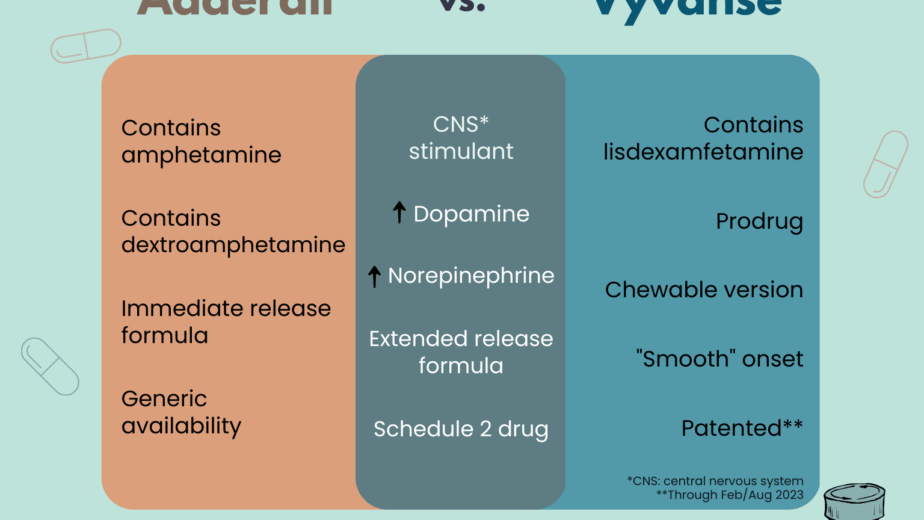
When your Vyvanse dose is too high, your central nervous system becomes overstimulated — producing the opposite of what the medication is meant to do. Instead of focus and calm, you get anxiety, irritability, a racing heart, insomnia, and sometimes a hollow, “zombie-like” emotional flatness. These effects signal that dextroamphetamine levels have exceeded your personal therapeutic threshold, and the dose needs to be reduced.
Why Too Much Vyvanse Makes ADHD Worse, Not Better
This is the counterintuitive reality of stimulant dosing that catches many patients off guard: more Vyvanse does not mean better focus. There is a therapeutic window — a dose range where the medication improves dopamine and norepinephrine balance just enough to sharpen executive function. Push past that window and the same neurotransmitters that help you focus at the right level begin to overwhelm the prefrontal cortex, producing anxiety, rigidity, and cognitive blunting.
Many Australians being titrated on Vyvanse for the first time experience a dose increase that feels worse — not because the medication isn’t working, but because it’s working too hard. Recognising what this looks like is essential for catching it quickly and correcting it before it affects your health or wellbeing.
What You Need to Know First
Vyvanse (lisdexamfetamine dimesylate) is available in Australia in six capsule strengths — 20 mg through 70 mg — with a hard maximum of 70 mg per day under TGA regulations. Once swallowed, the prodrug converts into dextroamphetamine in your red blood cells. At optimal doses, this raises dopamine and norepinephrine to levels that support focus, impulse control, and emotional regulation. At too-high doses, that same mechanism over-fires — creating a pharmacological state more similar to stimulant toxicity than therapeutic benefit.
Quick Reference: Signs Your Vyvanse Dose Is Too High
- Persistent anxiety, restlessness, or feeling “wired” through most of the day
- Heart racing or palpitations that don’t settle after the first week
- Severe insomnia — unable to sleep even hours past midnight
- Emotional flatness, disconnection, or the “zombie effect”
- Paradoxical worsening of focus — racing, rigid thoughts rather than calm clarity
- Obsessive or repetitive behaviours, skin-picking, or tics
- No appetite whatsoever — going a full day without eating
- Irritability, emotional volatility, or crying spells that feel medication-induced
- Headaches, tremors, or excessive sweating beyond mild side effects
The Zombie Effect: The Sign Most Patients Miss
The most clinically distinctive sign of a too-high Vyvanse dose is not anxiety or a fast heart rate — those are easy to identify. The sign that most patients miss, and that many prescribers underestimate, is emotional blunting — colloquially known as the “zombie effect”.
When dopamine and norepinephrine are pushed too high by an excessive dose, the brain doesn’t get sharper — it gets suppressed. The result is a person who feels unnaturally quiet, flat, and disconnected from themselves. They may appear calm and focused to others, but internally they feel hollow — no joy, no spontaneity, no sense of being present.
Specific symptoms of the zombie effect at a too-high Vyvanse dose include:
- Feeling like your personality has been “switched off”
- Losing interest in things you usually enjoy
- Over-focusing on unimportant tasks while ignoring everything else
- Feeling emotionally detached from conversations, relationships, or situations
- Not feeling hungry at all — beyond ordinary appetite suppression
- Seeming “fine” by external measures while feeling profoundly not yourself
This is one of the most common reasons adults stop taking Vyvanse — not because it doesn’t work, but because it works so powerfully at too high a dose that it erases the person along with the symptoms. This is always a dose problem, not a reason to abandon ADHD treatment entirely. Reducing the dose typically resolves it within days.
What happens when Vyvanse dose is too high Hobart
What happens when Vyvanse dose is too high Devonport
What happens when Vyvanse dose is too high Launceston
What happens when Vyvanse dose is too high Tasmania
What happens when Vyvanse dose is too high Victoria
What happens when Vyvanse dose is too high Queensland
What happens when Vyvanse dose is too high Canberra
What happens when Vyvanse dose is too high happens when Vyvanse dose is too low Australian Capital Territory
What happens when Vyvanse dose is too high South Australia
What happens when Vyvanse dose is too high New South Wales
What happens when Vyvanse dose is too high Darwin
What happens when Vyvanse dose is too high Ghan
What happens when Vyvanse dose is too high Northern Territory
What happens when Vyvanse dose is too high Australia
What happens when Vyvanse dose is too high Austria
What happens when Vyvanse dose is too high Germany
What happens when Vyvanse dose is too high United Kingdom
What happens when Vyvanse dose is too high Sweden
What happens when Vyvanse dose is too high Denmark
What happens when Vyvanse dose is too high Norway
What happens when Vyvanse dose is too high Finland
What happens when Vyvanse dose is too high Iceland
What happens when Vyvanse dose is too high Netherlands
What happens when Vyvanse dose is too high Spain
What happens when Vyvanse dose is too high Ireland
What happens when Vyvanse dose is too high Switzerland
Cardiovascular Signs: The Most Serious Physical Warning
Vyvanse raises heart rate and blood pressure at any dose — this is an expected, dose-dependent pharmacological effect. At therapeutic doses in healthy adults, these increases are mild and manageable. At too-high doses, they can become clinically significant.
Signs that cardiovascular strain is exceeding safe levels:
- Resting heart rate consistently above 100 beats per minute (normal is 60–100)
- Heart palpitations — the feeling of the heart skipping, fluttering, or pounding
- Chest tightness or chest pain
- Noticeable blood pressure spikes — symptoms include severe headache, blurred vision, or nosebleeds
- Shortness of breath during activity that previously felt easy
A 2023 study published in a peer-reviewed journal and highlighted by the Royal Australian College of General Practitioners found that long-term ADHD medication use at higher-than-average doses was associated with an approximately 4% annual increase in cardiovascular disease risk, particularly hypertension and arterial disease. Critically, this risk was only statistically significant at doses exceeding 1.5 times the average daily dose — meaning patients on lower, well-monitored doses did not show the same elevation.
What this means for you: If you’re experiencing persistent cardiac symptoms on your current dose, this warrants urgent contact with your prescriber — not monitoring and hoping it settles.
Psychological Signs: When the Stimulant Becomes the Problem
A too-high Vyvanse dose directly undermines the mental health benefits it’s supposed to provide. From clinical observation and patient-reported experience, these psychological signs are among the clearest indicators that a dose reduction is needed:
Anxiety and agitation:
The most commonly reported psychological sign of an excessive dose. If you feel wired, tense, or on edge through most of the day — especially later in the afternoon — this is overstimulation, not therapeutic effect. Anxiety that doesn’t appear until after a dose increase is almost always medication-related.
Paranoia or unusual thoughts:
At high doses, some patients report suspicious thinking, heightened mistrust, or a vague sense that something is wrong that they can’t explain. This is rare at standard doses but becomes more common as dosing approaches or exceeds the 70 mg ceiling.
Emotional hypersensitivity:
Crying more than usual, feeling easily hurt, or experiencing intense emotional responses to minor events are all reported symptoms of a too-high dose. This often catches patients off guard because they associate stimulants with emotional flattening — but at certain doses, some patients experience the opposite.
Worsening focus and cognitive rigidity:
At an excessive dose, thinking becomes rigid rather than flexible. Patients describe getting “stuck” on one idea or task, unable to shift attention even when needed — the opposite of the executive flexibility Vyvanse is meant to support.
Physical Signs: What Your Body Is Telling You
Beyond cardiovascular effects, an excessively high Vyvanse dose produces a cluster of physical symptoms that are distinct from mild, settling side effects:
- Persistent tremors or shakiness — hands, jaw, or body trembling throughout the day
- Excessive sweating — beyond what your activity level or ambient temperature warrants
- Severe dry mouth — persistent enough to affect speech, swallowing, or dental health
- Dilated pupils — noticeably enlarged in normal lighting conditions
- GI distress — nausea, stomach cramping, or diarrhoea that doesn’t improve after the first week
- Significant, rapid weight loss — losing more than 1–2 kg in the first few weeks is a flag worth raising
- Headaches — frequent or severe headaches, particularly mid-morning or early afternoon
The crucial distinction between “settling-in side effects” (expected in the first 1–2 weeks) and “dose-too-high side effects” is persistence and severity. Mild dry mouth or slight appetite reduction that fades after two weeks is normal. Tremors, persistent chest discomfort, or severe anxiety that doesn’t improve requires a prescriber contact.
Too High vs. Side Effects That Will Settle: How to Tell the Difference
This is one of the most practical questions patients ask, and the answer lies in timing and severity:
| Sign | Likely to Settle (Normal) | Flag for Dose Review |
|---|---|---|
| Appetite suppression | Mild, improves after week 2 | Eating nothing all day, ongoing weight loss |
| Dry mouth | First 1–2 weeks, manageable | Persistent and severe, affecting daily life |
| Heart rate increase | Slight increase, settles | Resting rate >100 bpm consistently |
| Sleep disruption | First 1–2 weeks | Severe insomnia beyond week 2 |
| Anxiety | Mild, first few days | Persistent, debilitating, worse after dose increase |
| Mood changes | Slight emotional adjustment initially | Flat affect, zombie feeling, emotional blunting |
| GI symptoms | First week, mild | Persistent nausea, vomiting, severe cramping |
The core question to ask yourself: Has this symptom appeared or significantly worsened since my most recent dose increase? If yes — that is the dose causing it.
What To Do If You Think Your Dose Is Too High
Do not abruptly stop taking Vyvanse without speaking to your prescriber. Sudden discontinuation after consistent stimulant use can cause a pronounced withdrawal-like rebound — fatigue, low mood, and a crash in motivation.
The right steps in Australia:
- Contact your prescribing psychiatrist or authorised prescriber and describe the specific symptoms you’re experiencing, when they started, and their severity
- Keep taking your current dose until you receive medical guidance — unless you are experiencing chest pain, hallucinations, seizures, or other emergency-level symptoms
- For emergency symptoms (chest pain, severe confusion, seizures, hallucinations, loss of consciousness), call 000 immediately
- For concerning but non-emergency symptoms, contact the Poisons Information Centre on 13 11 26 for immediate guidance
- Document your symptoms with times and severity — this gives your prescriber the clearest picture for a dose reduction decision
In most cases, a reduction of 10–20 mg is all that’s needed to shift from side-effect territory back into the therapeutic window. Many patients report feeling significantly better within 24–48 hours of a dose reduction.
Long-Term Risks of Staying on a Too-High Dose
Staying on a dose that’s clearly too high — whether due to delayed prescriber access, reluctance to “go backwards,” or misidentifying the problem — carries compounding risks over time:
- Hypertension: Chronically elevated blood pressure from high stimulant exposure increases long-term risk of stroke and cardiac disease
- Dopamine dysregulation: Sustained over-stimulation can dampen natural dopamine reward responses, contributing to low mood and anhedonia when off the medication
- Psychological dependence: Feeling unable to function without the medication can develop more readily at high doses where the contrast between “on” and “off” is most stark
- Sleep debt: Persistent insomnia from an excessive dose accumulates a sleep deficit that directly worsens ADHD symptoms, mood, and cognitive performance — a self-reinforcing negative cycle
Safety and Important Considerations for Australian Adults
- Vyvanse is a Schedule 8 controlled substance in Australia. Any dose change requires an authorised prescriber — self-reducing by splitting capsules is not clinically recommended and difficult to dose accurately
- Adults with pre-existing heart conditions face significantly elevated risk at higher doses. Cardiac monitoring — including blood pressure and resting heart rate checks — is recommended before and during treatment, particularly after dose increases
- Combining Vyvanse with other stimulants, alcohol, or certain antidepressants(particularly MAOIs) can produce dangerously amplified effects even at therapeutic doses, mimicking a too-high dose scenario
- The TGA completed its Vyvanse investigation in late 2025 confirming all product strengths met specification. If your medication feels excessively strong, this reflects your individual dose — not a product fault
Common Misconceptions About High Vyvanse Doses
Myth 1: “If the dose is within the approved 70 mg range, it can’t be too high for me.”
The 70 mg ceiling is a population-level safety maximum — not a target or guarantee of safety for every individual. People respond very differently to stimulants, and many adults reach their therapeutic threshold well below 70 mg. What’s appropriate is the lowest dose that produces meaningful benefit with tolerable side effects — not the highest allowable dose.
Myth 2: “Feeling anxious and wired means my ADHD is worse today, not that my dose is too high.”
ADHD does not cause heart palpitations, tremors, or dilated pupils. If these symptoms appeared or intensified after a dose increase, the medication — not the condition — is the most likely cause. Distinguishing between ADHD symptoms and stimulant side effects is a key skill for anyone on this medication.
Myth 3: “The zombie feeling means the medication has stopped working and I need a higher dose.”
This is one of the most dangerous misunderstandings in ADHD treatment, and it’s common. The zombie effect is a sign of over-medication, not under-medication. Increasing the dose at this point will worsen it. A dose reduction — not an increase — is the correct clinical response.
Practical Tips: Protecting Yourself at Any Dose
- Know your resting heart rate at baseline before starting Vyvanse — check it weekly during titration and report persistent rates above 100 bpm
- Track mood and personality as carefully as focus — the zombie effect can creep in gradually and be hard to self-identify without a reference point
- Ask someone who knows you well if they’ve noticed changes in your personality, emotional availability, or energy — close observers often catch over-medication before the patient does
- Do not increase your dose during a high-stress period — stress amplifies stimulant side effects and can make a tolerable dose temporarily feel excessive
- Keep a simple daily log using a 1–10 scale for focus, anxiety, appetite, and sleep — this data is invaluable for prescriber conversations about dose adjustment
FAQ: People Also Ask About a Too-High Vyvanse Dose
How do I know if my Vyvanse dose is too high or just causing normal side effects?
Normal settling-in side effects are mild and improve within 1–2 weeks without dose changes. A too-high dose produces symptoms that are persistent, intensify after a dose increase, and meaningfully impair your daily function or wellbeing — particularly anxiety, emotional blunting, insomnia, and cardiac symptoms. If any of these appeared or worsened after your last dose increase, the dose is the most likely cause.
Can a too-high Vyvanse dose make ADHD symptoms worse?
Yes — definitively. Above the therapeutic threshold, excessive dopamine and norepinephrine activity stresses the prefrontal cortex rather than supporting it. The result includes cognitive rigidity, inability to shift attention, obsessive over-focus, worsened impulsivity in some cases, and emotional volatility. This is one of the clearest clinical signs that a dose reduction is needed.
What is the zombie effect and does it mean my dose is too high?
The zombie effect refers to a state of emotional flatness, disconnection, and personality suppression caused by excessive CNS stimulation. If you feel like your “spark” is gone, you’re not laughing, not enjoying things, and feeling more like a functional robot than a person — yes, this almost always indicates the dose is too high. Reducing the dose typically resolves it within 24–72 hours.
Should I stop taking Vyvanse if my dose feels too high?
Do not stop abruptly without medical guidance. Sudden discontinuation can trigger a rebound crash — fatigue, low mood, and disrupted functioning. Contact your prescribing doctor and discuss a planned reduction of 10–20 mg. If you are experiencing chest pain, hallucinations, seizures, or loss of consciousness, call 000 immediately.
Can a too-high Vyvanse dose cause long-term heart problems?
Sustained exposure to excessively high stimulant doses has been associated with increased risk of hypertension and arterial disease over years of treatment. Research presented to the RACGP found a roughly 4% annual increase in cardiovascular disease risk with long-term high-dose use. This risk was not statistically significant at average or lower doses — emphasising the importance of using the lowest effective dose.
What happens if I accidentally take two Vyvanse doses in one day?
A double dose — even for a 30 mg patient — pushes total daily intake to 60 mg or higher, and for a 70 mg patient to 140 mg. This exceeds the maximum recommended dose and requires immediate contact with the Poisons Information Centre on 13 11 26, even if you feel fine. Symptoms may worsen progressively — cardiovascular complications, severe anxiety, and confusion can develop hours after ingestion.
How quickly will symptoms improve after a Vyvanse dose reduction?
Most patients notice meaningful improvement within 24–48 hours of a dose reduction, as dextroamphetamine clears the system within 2–3 days. Insomnia often improves within the first or second night. The zombie effect and anxiety typically lift faster — often within the first day at the lower dose.