
For most people with ADHD taking Vyvanse at prescribed therapeutic doses under medical supervision, the answer is yes — Vyvanse has a well-established safety profile backed by decades of clinical trial data, post-market surveillance, and real-world use. Like all medications, it carries risks — particularly cardiovascular, psychiatric, and dependency-related — but for the population it is designed to treat, its benefits consistently outweigh these risks when managed appropriately. The safety picture changes significantly for people who take it without a prescription, at excessive doses, or who have specific contraindicated conditions.
Why Safety Is a Nuanced Question for Vyvanse
“Is Vyvanse safe?” sounds like a yes/no question, but the honest answer is contextual. Safe for whom? At what dose? With what health history? For how long? The same drug that is clinically appropriate and well-tolerated for a healthy 30-year-old adult with ADHD carries genuinely different risk for someone with pre-existing heart disease, a history of psychosis, or no ADHD diagnosis at all.
This article separates the safety picture into the specific contexts that matter — prescribed therapeutic use, long-term use, special populations, and misuse — so you can assess the question accurately for your own situation.
What You Need to Know First
Vyvanse (lisdexamfetamine dimesylate) was approved by the FDA in 2007 and by the Australian TGA for ADHD treatment, and subsequently for moderate-to-severe binge eating disorder (BED) in adults. It has been studied in clinical trials covering up to 38 weeks of continuous use, and post-market data now spans nearly two decades of widespread prescription use. In Australia, it is a Schedule 8 controlled substance — a classification that reflects both its therapeutic value and its potential for misuse and dependence.
The TGA completed a review of all six Australian Vyvanse capsule strengths in late 2025, finding all products met specification. Any safety concerns about Vyvanse relate to the pharmacology of the drug itself — not to product quality.
Common Side Effects: What’s Expected and Manageable
The most frequently reported side effects in clinical trials are predictable extensions of Vyvanse’s stimulant mechanism and are manageable for most patients:
Very common (affecting more than 1 in 10 patients):
- Decreased appetite — present in most patients, most pronounced in the first weeks
- Insomnia or difficulty sleeping — typically related to dose timing
- Dry mouth — almost universal; manageable with regular hydration
- Elevated heart rate — mild in most patients; monitored at regular reviews
- Headache — especially in the first 1–2 weeks as the body adjusts
Common (affecting 1 in 10 to 1 in 100 patients):
- Nausea, stomach pain, or diarrhoea
- Weight loss — significant in some patients with prolonged use
- Irritability or anxiety — particularly if the dose is too high
- Elevated blood pressure — monitored as part of routine care
- Dizziness
Less common but clinically important:
- Mood swings, emotional blunting, or agitation
- Tics — new onset or worsening of existing tics
- Peripheral vasculopathy (Raynaud’s phenomenon) — changes in skin colour, numbness, or coldness in fingers and toes
- Growth suppression in children — significant enough to warrant regular height and weight monitoring
Most common side effects are dose-dependent — they worsen as the dose increases and often improve with reduction. The majority of patients experience meaningful improvement in side effects over the first 2–4 weeks as the body adjusts to the medication.
Serious Side Effects: What to Watch For
These are rare but require immediate medical attention:
- Chest pain, shortness of breath, or fainting — possible cardiac events; call 000 immediately
- Signs of psychosis — hallucinations, paranoid thoughts, or delusional thinking, particularly in patients with no prior psychiatric history
- Manic episodes — especially in patients with a personal or family history of bipolar disorder
- Severe allergic reaction — rash, swelling of the face/throat, difficulty breathing
- Peripheral vasculopathy — unexplained wounds or sores on fingers and toes; contact your prescriber immediately
- New or worsening depression or suicidal thoughts — particularly in the first weeks of treatment or after dose changes
Serious adverse events are significantly more likely in patients with pre-existing conditions or genetic vulnerabilities — which is why a thorough medical assessment before starting Vyvanse is not merely bureaucratic.
Long-Term Safety: What the Research Shows
This is the safety question most patients ask after the initial “is it safe?” — and the research here is more nuanced than either “completely safe” or “dangerous”.
Cardiovascular Safety
The most studied long-term risk is cardiovascular. A 2024 study presented to the American College of Cardiology and widely reported found that ADHD stimulants were associated with a small but statistically significant increased risk of cardiomyopathy (weakening of the heart muscle) over a 10-year follow-up period. The study’s lead author contextualised the finding directly: “You can have almost 2,000 patients on these medications for a year and you might only cause one of them to have a cardiomyopathy that they otherwise would not have had — but if you leave them on it for 10 years, 1 in 500 will have that happen.”
The same researchers stated clearly that these findings do not suggest aggressive cardiac screening is warranted before prescribing, or that the risk is sufficient to change prescribing practice — given that the benefits of treatment must be weighed against a low absolute risk.
A separate 2022 study examined risks of major cardiovascular and cerebrovascular events specifically in lisdexamfetamine (Vyvanse) users versus patients previously treated with other ADHD medications, finding that Vyvanse did not carry higher cardiovascular risk than comparator ADHD treatments.
What this means practically: Long-term Vyvanse use at therapeutic doses carries a small, real cardiovascular risk that grows incrementally over years — not a reason to avoid or stop treatment for most people, but a reason to maintain regular monitoring and annual prescriber reviews.
Growth Effects in Children
In paediatric patients, long-term Vyvanse use is associated with suppression of height and weight gain relative to expected growth trajectories. Clinical guidelines recommend regular height and weight monitoring, and drug holidays during school breaks are sometimes used in children specifically to allow growth recovery. This concern is primarily paediatric — it is not a significant issue for adults.
Cognitive and Neurological Safety
Concerns about long-term cognitive effects of stimulant use — particularly whether extended use changes the brain in lasting ways — have been studied without finding definitive evidence of lasting harm at therapeutic doses in human populations. Animal studies at high doses show neurotoxic effects, but these doses are not comparable to therapeutic human use. Long-term studies of adults with ADHD on stimulants show maintained or improved cognitive function relative to untreated ADHD.
Who Should NOT Take Vyvanse: Absolute Contraindications
The following groups should not take Vyvanse without careful specialist assessment:
- Pre-existing heart disease, structural heart defects, or moderate-to-severe hypertension— stimulant-induced cardiovascular strain is contraindicated
- Hyperthyroidism — pre-existing elevated thyroid function plus stimulant cardiovascular effects creates compounding risk
- Glaucoma — stimulants can increase intraocular pressure
- History of drug abuse or dependence — dependency risk is significantly elevated
- Current or recent MAOI use (within 14 days) — combining MAOIs with amphetamines can cause hypertensive crisis, a medical emergency
- Known hypersensitivity to amphetamines or any Vyvanse ingredient
Who Requires Extra Caution: Relative Contraindications
These groups can potentially use Vyvanse but require careful prescriber assessment, closer monitoring, and potentially modified dosing:
- Mild hypertension — blood pressure must be controlled before starting and monitored throughout
- History of psychosis, mania, or bipolar disorder — stimulants can unmask or worsen these conditions
- History of tics or Tourette’s syndrome — Vyvanse can worsen tics in some patients, though evidence is mixed
- Anxiety disorders — Vyvanse may worsen anxiety in some patients, particularly at higher doses
- Family history of sudden cardiac death, cardiac arrhythmia, or cardiomyopathy — warrants cardiac assessment before starting
- Elderly adults — limited clinical trial data; heightened cardiovascular monitoring recommended
- Adults with obesity seeking BED treatment — cardiovascular risk assessment is especially important in this population
Vyvanse Safety in Pregnancy
This is one of the most clinically difficult questions in ADHD treatment, and the honest answer is that the evidence base is limited.
What the data shows:
- Vyvanse is not classified as definitively safe or unsafe in pregnancy — the FDA has not issued a definitive ruling due to limited human data
- Animal studies show potential negative effects, but at doses not comparable to human therapeutic use
- A CDC study found a very low risk of certain birth defects (abdominal wall, limb) associated with ADHD medication use in early pregnancy
- Other risks associated with stimulant use in pregnancy include premature birth, low birth weight, lower Apgar scores, and neonatal withdrawal symptoms
- A 2026 case report published in PubMed described successful breastfeeding with maternal lisdexamfetamine use with no observed side effects in the infant in one instance — though this remains a single case report, not a generalised safety finding
Practical guidance for Australian women:
- If you are pregnant or planning pregnancy, discuss Vyvanse use with both your prescribing psychiatrist and your obstetrician or midwife before making any changes
- The risk-benefit decision is genuinely individual — for some women, untreated ADHD during pregnancy carries its own significant risks to maternal and foetal health
- Most experts recommend avoiding Vyvanse during the first 12 weeks (organogenesis) if clinically possible, as this is the highest-risk window for medication-related birth defects
- Vyvanse passes into breast milk — breastfeeding while taking Vyvanse should be a monitored, prescriber-supervised decision, not an automatic exclusion
Vyvanse Safety and Misuse: A Different Risk Picture
The safety profile described above applies to therapeutic use at prescribed doses under medical supervision. The risk picture changes substantially in misuse contexts:
- Supratherapeutic doses significantly amplify all dose-dependent risks — cardiovascular, psychiatric, and dependency-related
- Misuse in non-ADHD individuals, who lack the neurochemical deficit that Vyvanse corrects, produces a higher-than-baseline dopamine surge that drives the addiction pathway
- Combining Vyvanse with alcohol, other stimulants, or recreational drugs compounds cardiovascular and psychiatric risks in ways that are not proportional — they interact synergistically
- Misuse is associated with serious adverse events including psychosis, myocardial infarction, cardiomyopathy, and — in cases involving extreme doses or pre-existing undetected conditions — sudden death
Vyvanse vs. Other ADHD Medications: Relative Safety
Patients and prescribers frequently ask how Vyvanse’s safety profile compares to other ADHD medications:
Vyvanse’s prodrug design makes it pharmacologically less amenable to misuse than immediate-release amphetamine formulations — it cannot be converted to a faster-acting form by snorting or injecting. This is a meaningful safety distinction.
Safety and Important Considerations for Australian Adults
- Annual review with your authorised prescriber is not optional — it is the primary safety mechanism for long-term Vyvanse use in Australia. Blood pressure, heart rate, weight, mood, and ongoing ADHD symptom assessment should occur at every review
- Blood pressure and heart rate should be checked before starting Vyvanse and at each dose change — this is standard clinical practice, not extra caution
- Report new symptoms promptly — chest pain, worsening anxiety, mood changes, or any new psychiatric symptoms after starting or changing the Vyvanse dose should be reported to your prescriber, not managed at home
- Vyvanse is not approved for weight loss in Australia — using it solely or primarily for this purpose is off-label, clinically unsupported, and carries the full risk profile of the drug without the validated therapeutic indication
- The National Alcohol and Other Drug Hotline (1800 250 015) is available 24/7 for anyone concerned about their relationship with Vyvanse
Common Misconceptions About Vyvanse Safety
Myth 1: “Vyvanse is safe because it’s a prescription drug.”Prescription classification means it has been evaluated and approved for a specific therapeutic purpose in a specific population — not that it is without risk or safe for everyone. Prescription drugs cause serious adverse events when used incorrectly, in the wrong populations, or at the wrong doses. The safety of Vyvanse is conditional on appropriate use.
Myth 2: “Long-term Vyvanse use will permanently damage your brain.”Current human evidence does not support this claim for patients taking therapeutic doses as prescribed. Studies of long-term ADHD medication users do not show evidence of lasting cognitive harm at therapeutic doses — and the comparative harm of untreated, severe ADHD over decades (on relationships, career, mental health, and physical safety) is also a relevant part of the risk-benefit calculation.
Myth 3: “Vyvanse is safe during pregnancy because my doctor didn’t tell me to stop.”The absence of an explicit instruction to stop is not evidence of safety — it reflects clinical uncertainty and an individual risk-benefit discussion. Vyvanse use during pregnancy requires an active, explicit conversation with both your prescribing psychiatrist and your obstetrician — not passive continuation of your existing prescription.
Myth 4: “The cardiovascular research means I should stop taking Vyvanse.”The most recent and authoritative cardiac research concludes that the absolute cardiovascular risk of Vyvanse at therapeutic doses is low — low enough that researchers explicitly stated the findings do not warrant changes to prescribing practice or aggressive cardiac screening. The risk exists and grows incrementally with time, which is why monitoring matters — but it does not outweigh the well-established benefits of effective ADHD treatment for most patients.
- Is Vyvanse safe Hobart
- Is Vyvanse safe Devonport
- Is Vyvanse safe Launceston
- Is Vyvanse safe Tasmania
- Is Vyvanse safe Victoria
- Is Vyvanse safe Queensland
- Is Vyvanse safe Canberra
- Is Vyvanse safe Australian Capital Territory
- Is Vyvanse safe South Australia
- Is Vyvanse safe New South Wales
- Is Vyvanse safe Darwin
- Is Vyvanse safe Ghan
- Is Vyvanse safe Northern Territory
- Is Vyvanse safe Australia
- Is Vyvanse safe Austria
- Is Vyvanse safe Germany
- Is Vyvanse safe United Kingdom
- Is Vyvanse safe Sweden
- Is Vyvanse safe Denmark
- Is Vyvanse safe Norway
- Is Vyvanse safe Finland
- Is Vyvanse safe Iceland
- Is Vyvanse safe Netherlands
- Is Vyvanse safe Spain
- Is Vyvanse safe Ireland
- Is Vyvanse safe Switzerland
FAQ: People Also Ask About Vyvanse Safety
Is Vyvanse safe for long-term use?The current evidence is broadly reassuring at therapeutic doses with appropriate monitoring. Long-term use carries a small, incrementally growing cardiovascular risk — roughly 1 in 500 developing cardiomyopathy over 10 years compared to matched controls — but researchers who found this concluded it does not warrant changes to prescribing practice. The benefits of effective ADHD treatment for most adults outweigh this risk when balanced appropriately and monitored through regular prescriber review.
Is Vyvanse safe for children?Vyvanse is TGA-approved and clinically studied in children aged 6 and over. Growth suppression (reduced height and weight gain) is the primary paediatric-specific concern, requiring regular monitoring. Cardiovascular and psychiatric monitoring applies equally to children. Vyvanse has not been studied in children under 6 and is not recommended for this age group.
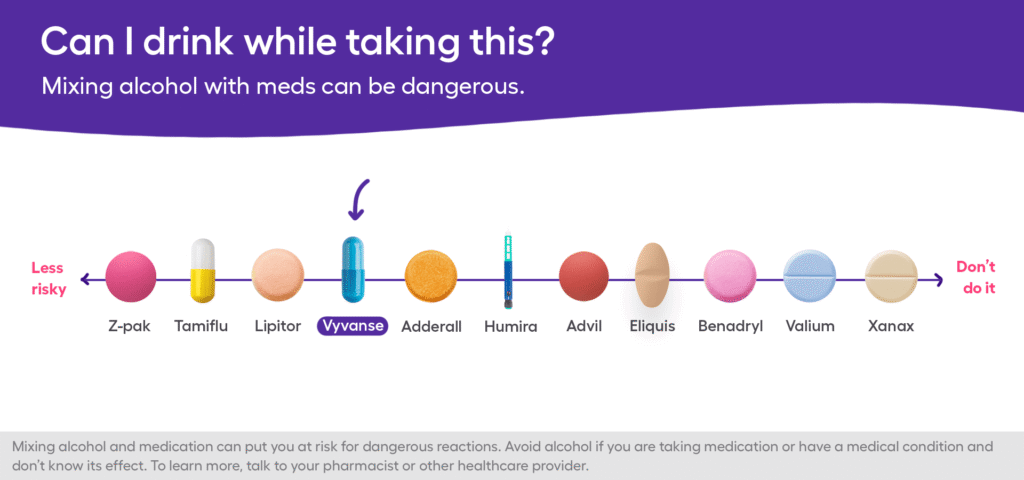
Is Vyvanse safe with alcohol?No — the combination is not recommended. Alcohol masks the subjective overstimulation of Vyvanse while compounding cardiovascular strain and dehydration. Alcohol is a CNS depressant and Vyvanse is a CNS stimulant; their opposing mechanisms do not cancel out safely — they create unpredictable and potentially dangerous interactions.
Is Vyvanse safe for someone with anxiety?It depends on the source and severity of the anxiety. For many ADHD patients, anxiety is a secondary consequence of unmanaged executive dysfunction — and Vyvanse relieves it by managing the ADHD. For patients with primary, independent anxiety disorders, Vyvanse can worsen anxiety — particularly at higher doses. This requires careful prescriber assessment and, typically, concurrent anxiety treatment.
Is Vyvanse safe for someone with heart problems?Pre-existing heart disease, structural cardiac abnormalities, or moderate-to-severe hypertension are contraindications to Vyvanse use. Mild or controlled hypertension requires careful assessment and monitoring. Anyone with a known cardiac condition or family history of sudden cardiac death, arrhythmia, or cardiomyopathy should have a formal cardiac assessment before starting Vyvanse.
Is Vyvanse safe during pregnancy?The evidence is limited and inconclusive. The FDA has not classified Vyvanse as definitively safe or unsafe in pregnancy. Animal data shows potential risks; human data is insufficient to draw firm conclusions. The decision to continue, reduce, or stop Vyvanse during pregnancy must be made through an active, individual risk-benefit discussion with both your prescribing psychiatrist and your obstetrician — not through self-adjustment or passive continuation.
Is Vyvanse safe to take every day?For most patients with ADHD or BED, daily use at prescribed doses is the intended treatment schedule and is supported as safe under regular medical supervision. The safety data supporting Vyvanse use spans daily dosing in clinical trials of up to 38 weeks, with post-market data covering decades. Annual reviews monitoring cardiovascular parameters and ongoing treatment appropriateness are the standard of care in Australia.
