
Without ADHD, Vyvanse does not produce calm focus — it produces overstimulation. Because the neurotypical brain already has adequate dopamine and norepinephrine signalling, adding dextroamphetamine pushes those systems beyond their optimal range. The result is a stimulant high: elevated energy, heightened alertness, reduced appetite, and often euphoria — followed by a crash, anxiety, disrupted sleep, and dependency risk. It does not make you smarter, and its “cognitive enhancement” effects are far less impressive than its reputation suggests.
Why This Question Is Being Asked More Than Ever
Vyvanse is increasingly used without a prescription in university and workplace settings as a perceived “smart drug” or performance enhancer. Surveys suggest that 5–35% of adults taking stimulants may be using them for non-medical lifestyle purposes — gaining a competitive edge at work, managing fatigue during exam periods, or simply seeking the energy and focus the drug is known to produce in ADHD patients.
The problem is that the experience — and the risk profile — of Vyvanse in a brain without ADHD is fundamentally different from its therapeutic effect in a brain that needs it. Understanding why matters enormously for anyone who has considered taking it, been offered it, or is curious about what it actually does.
What You Need to Know First
Vyvanse (lisdexamfetamine dimesylate) converts to dextroamphetamine in your bloodstream, which then blocks the reuptake of dopamine and norepinephrine — keeping them active in synapses longer than they would normally remain. In the ADHD brain, this corrects a deficit, restoring neurotransmitter levels to a functional baseline. In the neurotypical brain, no such deficit exists — and adding dextroamphetamine floods circuits that are already functioning at their intended level.
This is not a subtle pharmacological distinction. It is the core reason the same drug produces calm and clarity in someone with ADHD, and a stimulant rush in someone without it.
What Vyvanse Actually Feels Like Without ADHD
The Initial Effect: Stimulant High
For a neurotypical person, the first experience of Vyvanse is typically a pronounced stimulant effect that arrives 90 minutes to 2 hours after taking it and peaks around 3–5 hours. This includes:
- A surge of energy and wakefulness — often described as significantly more intense than caffeine
- Heightened alertness and a feeling of enhanced clarity or sharpness
- Euphoria in many first-time users — a mood elevation and sense of confidence or capability that is pharmacologically produced, not therapeutic
- Reduced appetite — often dramatically so
- Faster, more pressured thinking — thoughts arrive quickly and feel vivid
- Increased talkativeness and sociability in some users
At low doses (30 mg), these effects are more moderate. At higher doses — particularly the 50–70 mg range — the euphoric and stimulant effects are significantly more pronounced.
How This Differs Fundamentally From the ADHD Experience
The community-observed and clinically documented contrast could not be clearer:
| Experience | ADHD Brain | Non-ADHD Brain |
|---|---|---|
| Primary feeling | Quiet clarity, calm focus | Stimulant rush, energy, euphoria |
| Mental state | Noise reduces; tasks feel approachable | Thoughts accelerate; may race |
| Emotional tone | Stability, proportionate reactions | Elevated mood; potential anxiety |
| Productivity | Genuinely improved executive function | Short-term focus boost; then crash |
| Energy | Normalised — not “hyper” | Amplified beyond normal levels |
| Reward/pleasure | Normal; medication is not pleasurable | Euphoric dopamine flood |
| Appetite | Suppressed, manageable | Often severely suppressed |
| Crash | Mild-to-moderate daily fade | Often pronounced rebound |
The ADHD community frequently expresses genuine bewilderment at non-ADHD use: “I was so shocked people would take it at a party,” one Redditor noted. “It calms me down and makes me quiet and chill — the complete opposite of what it does to them”.
The “Smart Drug” Myth: What Research Actually Shows
The premise driving most non-ADHD Vyvanse use is that it enhances cognitive performance — making you smarter, more creative, or more intellectually capable. The research systematically deflates this belief:
What stimulants do NOT do in neurotypical brains:
- Increase IQ — this has been clearly established across multiple studies
- Improve short-term memory acquisition
- Improve cognitive flexibility or creative problem-solving
- Meaningfully enhance complex academic or professional performance
What stimulants DO briefly do in neurotypical brains:
- Improve long-term retention of information studied while medicated — but only under specific conditions
- Improve rote memory tasks — repetitive, single-dimension recall
- Improve sustained vigilance on boring, repetitive tasks
- Increase subjective confidence — which users often misinterpret as improved performance
A peer-reviewed analysis summarised the evidence bluntly: “Stimulants are more effective at correcting deficits than enhancing performance.” The cognitive benefit is real but limited, domain-specific, and primarily relevant to people who have a deficit to correct — not to neurotypical individuals who believe they can access untapped mental capacity through pharmacology.
The Lancet report on this issue was equally direct: millions of adults are taking stimulants for lifestyle enhancement — and long-term safety data on stimulant use in healthy non-ADHD adults simply does not exist.
The Side Effects: What Nobody Talks About
For neurotypical users, the side effect profile of Vyvanse is typically more pronounced and more distressing than for ADHD users — because the drug is pushing beyond biological need rather than filling a gap:
Common side effects in non-ADHD users:
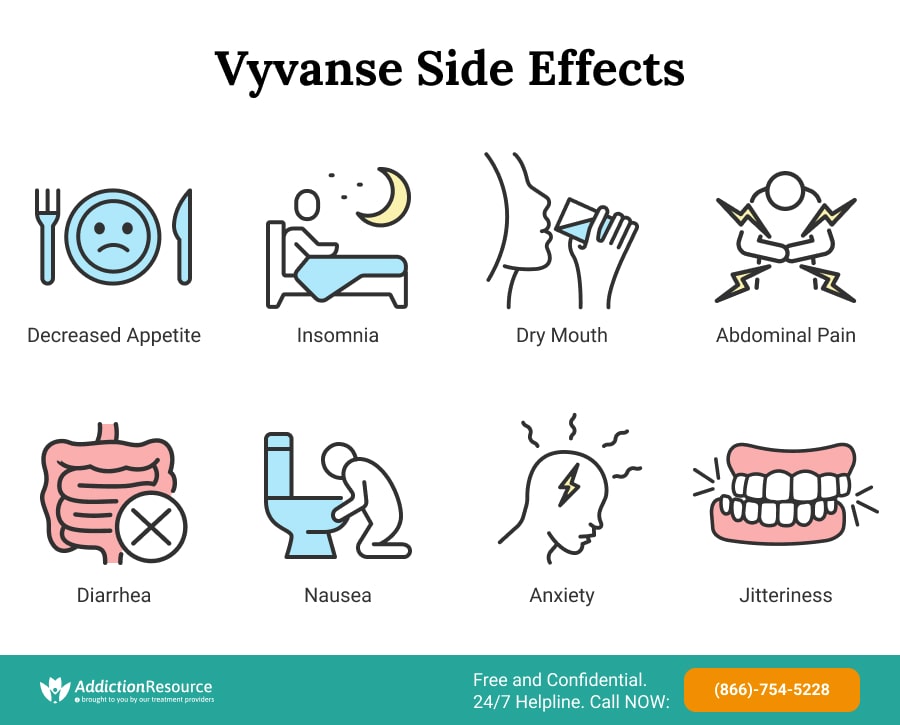
- Anxiety and restlessness — often significant, arriving during the peak window
- Elevated heart rate and blood pressure — the cardiovascular stimulation of a too-high dose applies here from the first dose
- Insomnia — even a single 30 mg dose taken by a neurotypical person in the morning can disrupt sleep that night
- Irritability — particularly during the comedown phase
- Jaw clenching and teeth grinding
- Headaches — often arriving as dextroamphetamine peaks
- Severe appetite suppression — many users report eating almost nothing on dosing days
- Emotional rebound — a pronounced crash of mood and energy as the medication wears off
- Psychosis — stimulant misuse at higher doses can trigger paranoid or psychotic symptoms, particularly in individuals with a predisposition
- Panic attacks — the cardiovascular and anxiogenic effects of supratherapeutic dextroamphetamine exposure can precipitate panic in susceptible individuals
- Cardiac events — misuse of stimulants has been associated with myocardial infarction, cardiomyopathy, and in rare cases sudden death, particularly in those with undiagnosed cardiac conditions
The Dependency and Addiction Risk
This is the most clinically significant concern with Vyvanse use in neurotypical individuals — and the one most consistently underestimated by people who use it recreationally or for performance enhancement.
In the ADHD brain, Vyvanse restores dopamine signalling to normal levels. The experience is not euphoric — it is functional. The brain does not associate the medication with a “reward” signal because the dopamine system is simply returning to baseline.
In the neurotypical brain, Vyvanse produces a dopamine surge above baseline. This is processed by the brain’s reward circuitry as a genuinely pleasurable, rewarding experience — exactly the signal that drives addiction. The brain remembers the euphoria, associates the act of taking the drug with reward, and creates a motivation to repeat the experience.
This is why Vyvanse carries a significantly higher dependency risk in non-ADHD users than in therapeutic ADHD patients:
- Each dose reinforces the reward pathway more strongly
- The crash after each dose creates a motivating discomfort — the brain learns that the drug relieves it
- Tolerance develops, requiring higher doses to achieve the same effect
- The cycle of euphoria and crash accelerates progression toward compulsive use
A case study referenced in community discussion describes escalation from therapeutic-seeming use to 120 mg daily, at which point social functioning had collapsed entirely. This is not an isolated anecdote — it reflects a well-documented pharmacological trajectory for stimulant use in people whose neurochemistry doesn’t require correction.
What “Cognitive Enhancement” Actually Looks Like in Practice
Here is what research and honest patient reports consistently show happens over time for neurotypical Vyvanse users who pursue it as an academic or professional enhancer:
Short term (first few weeks):
- Subjective sense of improved focus and productivity
- Ability to work for longer hours with less perceived fatigue
- Enhanced confidence and motivation
- Reduced appetite serving as incidental “benefit” for some users
Medium term (weeks to months):
- Tolerance develops — the initial dose produces less euphoria and less perceived cognitive benefit
- Sleep quality deteriorates, undermining the cognitive performance the medication was supposed to enhance
- Anxiety increases — often persistently
- Performance on complex tasks plateaus or declines as sleep deprivation and anxiety compound
Long term (months to years):
- Dependency risk increases significantly
- Cessation produces withdrawal — fatigue, low mood, and cognitive underperformance — creating an apparent “need” for the medication
- The long-term cognitive effects on a healthy, non-ADHD brain are genuinely unknown — this is an active research gap
The Legal Reality in Australia
This is non-negotiable context for any Australian reading this. Vyvanse is a Schedule 8 controlled substance under Australian law. This means:
- Possession without a prescription is a criminal offence — across every state and territory in Australia
- Supply to another person is a more serious criminal offence — even without financial exchange
- Penalties vary by state but can include fines and imprisonment
- Workplace drug testing via urine screens will detect amphetamines — lisdexamfetamine and dextroamphetamine show as amphetamine-positive. Without a valid prescription and medical documentation, a positive test has serious professional consequences
- Sporting competition: WADA prohibits amphetamine use in competition. Athletes using Vyvanse without a Therapeutic Use Exemption (TUE) from the Australian Sports Drug Medical Advisory Committee face disqualification and bans
The legal framing is important because Vyvanse misuse is often treated casually — sharing a pill, helping out a stressed friend, or using a leftover prescription. Under Schedule 8 regulations, these are all criminal acts regardless of intent.
Safety and Important Considerations
- There is no safe recreational dose of Vyvanse for non-ADHD individuals — the therapeutic window established in clinical trials applies to ADHD patients, not neurotypical users. What constitutes a “low dose” in ADHD treatment pushes a neurotypical brain above its dopamine regulatory threshold
- Undiagnosed cardiac conditions are the primary physical danger — stimulant-associated sudden death in young adults is almost always associated with undiagnosed structural heart conditions or arrhythmias. You cannot know you’re at risk without a cardiac assessment
- Mental health history matters critically — individuals with personal or family history of psychosis, bipolar disorder, or anxiety disorders face substantially elevated risk of serious psychiatric adverse events from stimulant use
- Combining with alcohol or other substances dramatically amplifies risk — alcohol masks stimulant overstimulation while compounding cardiovascular strain and dehydration
Common Misconceptions About Vyvanse Without ADHD
Myth 1: “If it helps me focus, I must have undiagnosed ADHD.”
This is one of the most persistently repeated misconceptions about stimulant medication — and it is clinically inaccurate. Stimulants produce some degree of focus improvement and arousal in virtually everyone by boosting dopamine and norepinephrine. A positive response to stimulants is not diagnostic of ADHD. Proper ADHD diagnosis requires comprehensive clinical assessment — not a medication trial.
Myth 2: “It’s safe because doctors prescribe it.”
Vyvanse is safe for the population it is prescribed for — people with ADHD or binge eating disorder, under medical supervision, at established therapeutic doses. This safety profile does not transfer to non-ADHD use. The risk-benefit calculation for a neurotypical person — where there is no neurodevelopmental deficit to correct — is entirely different.
Myth 3: “It makes you smarter.”
The research is clear: stimulants do not increase intelligence, improve creativity, or enhance complex cognitive performance in neurotypical individuals. They improve sustained vigilanceand rote memory retention under specific conditions — modest, domain-limited effects that are routinely overstated by users whose subjective confidence (itself a drug effect) they mistake for genuine cognitive enhancement.
- What does Vyvanse feel like without ADHD Hobart
- What does Vyvanse feel like without ADHD Devonport
- What does Vyvanse feel like without ADHD Launceston
- What does Vyvanse feel like without ADHD Tasmania
- What does Vyvanse feel like without ADHD Victoria
- What does Vyvanse feel like without ADHD Queensland
- What does Vyvanse feel like without ADHD Canberra
- What does Vyvanse feel like without ADHD Australian Capital Territory
- What does Vyvanse feel like without ADHD South Australia
- What does Vyvanse feel like without ADHD New South Wales
- What does Vyvanse feel like without ADHD Darwin
- What does Vyvanse feel like without ADHD Ghan
- What does Vyvanse feel like without ADHD Northern Territory
- What does Vyvanse feel like without ADHD Australia
- What does Vyvanse feel like without ADHD Austria
- What does Vyvanse feel like without ADHD Germany
- What does Vyvanse feel like without ADHD United Kingdom
- What does Vyvanse feel like without ADHD Sweden
- What does Vyvanse feel like without ADHD Denmark
- What does Vyvanse feel like without ADHD Norway
- What does Vyvanse feel like without ADHD Finland
- What does Vyvanse feel like without ADHD Iceland
- What does Vyvanse feel like without ADHD Netherlands
- What does Vyvanse feel like without ADHD Spain
- What does Vyvanse feel like without ADHD Ireland
- What does Vyvanse feel like without ADHD Switzerland
FAQ: People Also Ask About Vyvanse Without ADHD
What does Vyvanse feel like if you don’t have ADHD?
For a neurotypical person, Vyvanse feels like a significant stimulant drug — elevated energy, euphoria, heightened alertness, fast thinking, reduced appetite, and increased confidence. This is fundamentally different from what ADHD patients experience (calm, quiet focus). The neurotypical response reflects a dopamine system pushed above its functional baseline rather than one being restored to it.
Does Vyvanse work as a study drug for people without ADHD?
Partially, and less impressively than most users expect. Stimulants improve sustained vigilance and long-term retention of rote-learned material in some non-ADHD individuals. They do not improve IQ, complex reasoning, creative problem-solving, or short-term memory acquisition. The perceived improvement is often inflated by the drug’s mood-elevating and confidence-boosting effects — not by genuine cognitive enhancement.
Is it dangerous to take Vyvanse if you don’t have ADHD?
Yes — meaningfully so. The risks include cardiovascular strain (elevated heart rate and blood pressure), psychiatric adverse events (anxiety, panic attacks, in rare cases psychosis), significant dependency potential, severe insomnia, and — in people with undiagnosed cardiac conditions — the rare but real risk of serious cardiac events. The Lancet specifically highlighted the absence of long-term safety data for stimulant use in non-ADHD adults.
Can you get addicted to Vyvanse without ADHD?
Yes — and the risk is substantially higher than in ADHD patients. In the non-ADHD brain, Vyvanse produces a dopamine surge above baseline that the reward system processes as genuinely pleasurable — the core mechanism of addiction. ADHD patients taking the same drug at the same dose typically do not experience this euphoric reward signal, because they’re simply restoring a deficit rather than amplifying function above normal.
Does Vyvanse feel the same for everyone without ADHD?
No — individual neurochemistry produces significant variation. Some neurotypical users experience predominantly anxiety and jitteriness rather than euphoria. Others report nausea and headaches. Still others describe an intense, uncomfortable overstimulation that is not pleasurable at all. The euphoric, energising experience is most commonly reported but is not universal.
Is it illegal to take Vyvanse without a prescription in Australia?
Yes — clearly and unambiguously. Vyvanse is Schedule 8 in all Australian states and territories. Possession without a valid prescription is a criminal offence. Supplying it to another person — even without payment — is also criminal. Penalties vary by state but include fines and potential imprisonment.
Will Vyvanse show up on a drug test if I don’t have a prescription?
Yes. Urine workplace drug tests screen for amphetamines and will detect dextroamphetamine (the active compound from Vyvanse). Without a valid prescription and medical documentation confirming therapeutic use, a positive test result carries serious professional and potentially legal consequences. Roadside police saliva tests in Australia screen for methylamphetamine (meth) specifically — not lisdexamfetamine — so prescribed Vyvanse users are not routinely flagged. However, workplace and sporting drug tests are more comprehensive.
