
For someone with ADHD, Vyvanse addresses a fundamental neurochemical imbalance — increasing the availability of dopamine and norepinephrine in the brain’s arousal and reward circuits to reduce inattention, impulsivity, and hyperactivity. The result is not a sedative effect or artificial calm — it’s a restoration of the kind of cognitive function most people without ADHD take for granted. Tasks that felt impossible become approachable; emotional reactions become proportionate; the internal noise quiets.
Why Vyvanse Works Differently in an ADHD Brain
This is the question most patients want answered honestly: why does a stimulant calm someone with ADHD while it would overstimulate someone without it? The answer lies in what the ADHD brain is actually missing.
The ADHD brain is not simply an attention-deficit brain — it is a brain with structural and functional differences in the regions responsible for executive function, impulse control, and reward processing. Studies have found smaller brain volume in areas controlling emotional response and impulse control, reduced blood flow to the prefrontal cortex, and a dopamine and norepinephrine system that doesn’t bind to receptors as effectively as it should. In this context, a stimulant doesn’t over-activate an already functioning system — it brings an underactive one up to a functional baseline.
What Vyvanse Is and How It Works
Vyvanse (lisdexamfetamine dimesylate) is a prodrug — it is pharmacologically inactive until it reaches the bloodstream, where red blood cells cleave a lysine molecule from lisdexamfetamine to release dextroamphetamine. This gradual conversion is what makes Vyvanse smoother in onset and longer-lasting (10–14 hours) than most other stimulants.
Once active, dextroamphetamine works primarily by blocking the reuptake transporters for dopamine and norepinephrine — the proteins responsible for pulling these neurotransmitters back into the neuron after they’ve been released into the synapse. With reuptake blocked, dopamine and norepinephrine remain in the synapse longer, binding more readily to their receptors. The result is enhanced signalling in the circuits responsible for attention, motivation, emotional regulation, and impulse control.
What Vyvanse Does to the ADHD Brain: The Neuroscience
The Dopamine Connection
Dopamine is often described as the brain’s “reward” neurotransmitter, but in the context of ADHD it plays a more specific role: making ordinary tasks feel worth doing. In the ADHD brain, low dopamine signalling means that routine, low-stimulation activities — administrative tasks, homework, chores, paperwork — register as unrewarding, triggering avoidance and procrastination.
A landmark 2026 study published in Psychology Today and based on fMRI data from nearly 12,000 children found that stimulant medications like Vyvanse produce their largest brain effects not in the prefrontal attention circuits (as previously thought), but in the arousal networks and reward centres of the brain. The study showed that stimulants essentially reward the brain before a task even begins — making even mundane activities feel sufficiently meaningful to pursue.
This finding reframes how we understand Vyvanse: it is less about forcing the brain to pay attention and more about restoring its capacity to find tasks worth paying attention to.
The Norepinephrine Connection
Norepinephrine supports a different but equally critical function: alertness, signal-to-noise filtering, and the ability to sustain effort over time. In the ADHD brain, norepinephrine dysregulation — particularly in the prefrontal cortex — impairs working memory and makes it hard to hold information in mind while using it. Vyvanse’s increase in norepinephrine availability directly supports working memory, sustained attention, and the ability to filter out irrelevant distractions.
Together, the dopamine and norepinephrine effects of Vyvanse address the two principal cognitive failures of ADHD: motivation failure (dopamine) and attentional signal failure(norepinephrine).
A Newly Understood Mechanism
The 2026 fMRI research also found that the functional connectivity pattern produced by stimulant medication mirrored the brain pattern of a well-rested, non-sleep-deprived brain. Sleep-deprived children on stimulants had classroom performance equivalent to well-rested children not on medication. This reframes Vyvanse’s mechanism again: it does not just treat ADHD as a static condition — it actively compensates for the chronically under-functioning arousal and reward system that characterises the ADHD brain.
What Vyvanse Actually Changes Day to Day: ADHD Adults
Focus and Task Initiation
The most consistently reported change from Vyvanse in adults with ADHD is improvement in task initiation and sustained effort. The tasks that sat undone for days or weeks — emails, admin, household management, filing — become approachable. The neurological bottleneck lifts.
Critically, this is not the same as hyperfocus or intense concentration. At the right dose, Vyvanse produces flexible, sustainable focus — the ability to start, continue, shift, and complete tasks as circumstances require. This is what people without ADHD experience as normal cognitive function; for those with ADHD, it often feels revelatory.
Clinical trials measuring ADHD symptom severity using the standardised ADHD Rating Scale (ADHD-RS) found average score reductions of 16–27 points in patients taking Vyvanse across adult and paediatric populations — compared to 6–8 points for placebo. This represents a clinically meaningful, statistically significant improvement in core ADHD symptoms.
Impulse Control
Impulsivity in ADHD is not a character flaw — it is a product of insufficient dopamine and norepinephrine support for the brain’s “braking” system. When Vyvanse is working effectively, patients consistently report a pause appearing where none existed before. They don’t stop having impulses; they gain the fraction of a second needed to evaluate them before acting.
In practice, this means:
- Fewer interrupted conversations — the urge to speak is present, but a brief internal check arrives before the words
- More considered decisions — purchasing, commitments, emotional reactions — rather than reflexive ones
- Reduced risk-taking behaviour and fewer “why did I do that?” moments
- Improved capacity to wait in queues, follow sequential processes, and tolerate delay
Emotional Regulation
Emotion dysregulation is one of the most impairing and least-discussed features of ADHD in adults — and one of the most consistently improved by effective stimulant treatment. Adults with ADHD frequently experience disproportionate emotional responses, difficulty recovering from upset, heightened rejection sensitivity, and rapid mood cycling that can strain every significant relationship in their lives.
When Vyvanse is working, the emotional landscape shifts noticeably. Reactions feel more proportionate. The time to recover from frustration shortens. There is more psychological space between a stimulus and a response. Many adult patients report this as the most surprising and impactful change — particularly because they didn’t connect their emotional volatility to ADHD before diagnosis.
Working Memory
Working memory — the ability to hold information in mind and use it in real time — is one of the most impaired executive functions in ADHD. It underlies almost every daily functioning challenge: following multi-step instructions, remembering what you were about to do, holding a conversation thread, reading a paragraph and retaining it.
Vyvanse’s norepinephrine effect directly targets working memory performance. Patients commonly report:
- Being able to follow conversations without losing the thread
- Remembering what they walked into a room for
- Holding an idea in mind long enough to act on it
- Following a complex recipe, instruction set, or verbal directive without needing it repeated
Organisation and Planning
Executive dysfunction in ADHD includes impairment in planning, sequencing, and organisation — the ability to break a goal into steps and execute them in order. Vyvanse doesn’t install organisational skills — as one community member on r/adhdwomen noted clearly, “pills don’t impart skills”. But it removes the neurochemical barrier that prevents those skills from being accessed and applied.
At an effective dose, patients find that the planning tools and strategies they’ve been trying to use — planners, alarms, reminders, lists — actually work, because the brain is now capable of engaging with and following through on them.
What Vyvanse Does to the ADHD Brain vs. a Non-ADHD Brain
This is the question that comes up most often in households where one partner takes Vyvanse and wonders why the other would be affected differently:
| Effect | ADHD Brain | Non-ADHD Brain |
|---|---|---|
| Focus | Improves from impaired to functional baseline | May over-focus or narrow attention unhelpfully |
| Arousal | Normalises underactive arousal circuits | Over-stimulates already adequate arousal |
| Impulse control | Restores braking function | May create rigidity rather than flexibility |
| Mood | Stabilises dysregulated emotional responses | Can create anxiety, agitation, or irritability |
| Energy | Reduces fatigue from cognitive effort | Produces artificial stimulant energy |
| Sleep | May disturb sleep if dose is too high or too late | More likely to significantly disrupt sleep |
The fundamental difference is that Vyvanse restores function that is impaired in the ADHD brain — it fills a deficit. In a neurotypical brain, the same mechanisms are already operating at adequate levels, so Vyvanse pushes them beyond their intended range rather than up to it.
The Real-World Picture: What ADHD Adults Notice
Beyond the clinical language, here is what actually changes for adults with ADHD on effective Vyvanse treatment — drawn from patient experience and clinical observation:
- Mornings become functional — the paralysing inertia of getting started on the day lifts
- Work output improves — projects actually reach completion; deadlines stop being crises
- Finances stabilise — impulsive spending decreases; bills get paid on time
- Relationships improve — patience increases, listening improves, emotional volatility reduces
- Self-esteem rebuilds — succeeding at tasks that previously defeated you is a profoundly affirming experience
- Driving becomes safer — attention to the road, hazard anticipation, and reaction quality all improve
- Parenting becomes easier — the emotional bandwidth and follow-through that parenting demands become accessible
- The inner monologue quiets — the relentless background noise of competing thoughts and anxieties reduces to a manageable hum
What Vyvanse Does NOT Do for ADHD
Equally important is an honest account of what Vyvanse does not do — because unrealistic expectations lead to unnecessary disappointment:
- It does not teach skills. Vyvanse removes the neurochemical barrier to executive function — it does not build skills where none exist. Behavioural strategies, therapy, and practice are still needed to develop the organisational habits and emotional tools that ADHD has prevented
- It does not work without direction. Vyvanse amplifies focus — but if you direct that focus at social media or a video game, that’s where it goes. Intentional direction of attention is still required
- It does not eliminate ADHD. Vyvanse manages ADHD symptoms; it does not cure the underlying neurodevelopmental condition. When you stop taking it, your baseline ADHD returns
- It does not guarantee productivity. Vyvanse improves the capacity for focus and task initiation — but motivation, environmental factors, and sleep quality still matter significantly
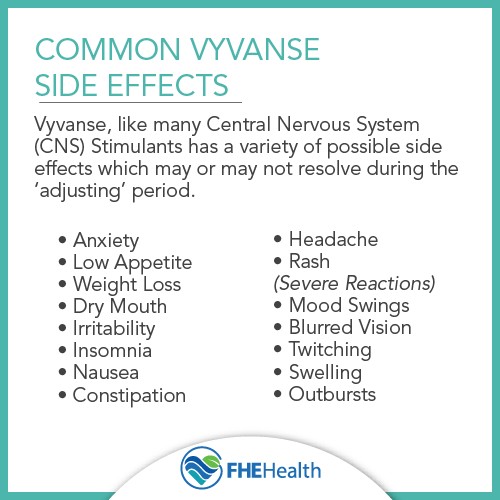
- It does not remove all side effects. Appetite suppression, dry mouth, and mild sleep disruption are common and persistent for some patients, even at well-calibrated doses
Clinical Effectiveness: What the Research Shows
Multiple randomised controlled trials have established Vyvanse as an effective treatment for ADHD in both children and adults. Key findings:
- In 4-week clinical studies, average ADHD-RS scores reduced by 16–27 points in Vyvanse groups — compared to 6–8 points in placebo groups
- Vyvanse demonstrated effectiveness over 30-week follow-up periods without significant loss of effect in the majority of patients
- Vyvanse was found to be comparable in effectiveness to mixed amphetamine salts (Adderall equivalent) but with a smoother onset and less pronounced end-of-day crashdue to its prodrug mechanism
- The prodrug mechanism also reduces the risk of abuse compared to immediate-release amphetamine formulations — it cannot be readily converted to a faster-acting form
Safety and Important Considerations for Australian Adults
- In Australia, Vyvanse is a Schedule 8 controlled substance requiring prescription from an authorised prescriber. It is TGA-approved for ADHD in adults and children aged 6 and older, and for moderate-to-severe binge eating disorder in adults
- Vyvanse is not a first-line treatment for depression, anxiety, or fatigue — while it may improve these as secondary symptoms of ADHD, prescribing it for these conditions without an ADHD diagnosis is off-label and not TGA-approved in Australia
- The 2026 fMRI research findings are important context: they confirm that Vyvanse works differently than previously understood — through arousal and reward networks rather than direct prefrontal attention circuits. This supports combining Vyvanse with sleep management and behavioural strategies, not relying on it as the sole treatment
- Regular prescriber reviews — at least annually — are standard and appropriate to assess ongoing effectiveness, side effects, and whether dose adjustments are warranted
Common Misconceptions About What Vyvanse Does
Myth 1: “Vyvanse gives people with ADHD a ‘superpower’ — they become more focused than anyone.”
Vyvanse brings the ADHD brain up to a functional baseline — it does not elevate it above typical neurological function. At the right dose, a person with ADHD on Vyvanse functions roughly comparably to a neurotypical person. At too high a dose, the excess produces anxiety, rigidity, and worsened focus — exactly as it would in a neurotypical brain pushed above its optimal range.
Myth 2: “If a stimulant calms you, it proves you have ADHD.”
This is one of the most widespread ADHD myths. While Vyvanse does produce a calming, focusing effect in people with ADHD at therapeutic doses, stimulants also produce some degree of focus and arousal reduction in people without ADHD under certain conditions. The response to medication is not a diagnostic test — a proper ADHD diagnosis requires comprehensive clinical assessment, not a trial of stimulants.
Myth 3: “Vyvanse is just speed — it’s not a real medication.”
Vyvanse contains dextroamphetamine, which is an amphetamine compound. This is also why it works for ADHD — amphetamines are among the most effective and well-studied treatments for ADHD, with decades of safety and efficacy data. The prodrug delivery system of Vyvanse was specifically designed to produce a more gradual, controlled, and abuse-resistant release compared to earlier amphetamine formulations. Describing it dismissively as “speed” misrepresents both the pharmacology and the clinical context entirely.
- What does Vyvanse do to someone with ADHD Hobart
- What does Vyvanse do to someone with ADHD Devonport
- What does Vyvanse do to someone with ADHD Launceston
- What does Vyvanse do to someone with ADHD Tasmania
- What does Vyvanse do to someone with ADHD Victoria
- What does Vyvanse do to someone with ADHD Queensland
- What does Vyvanse do to someone with ADHD Canberra
- What does Vyvanse do to someone with ADHD Australian Capital Territory
- What does Vyvanse do to someone with ADHD South Australia
- What does Vyvanse do to someone with ADHD New South Wales
- What does Vyvanse do to someone with ADHD Darwin
- What does Vyvanse do to someone with ADHD Ghan
- What does Vyvanse do to someone with ADHD Northern Territory
- What does Vyvanse do to someone with ADHD Australia
- What does Vyvanse do to someone with ADHD Austria
- What does Vyvanse do to someone with ADHD Germany
- What does Vyvanse do to someone with ADHD United Kingdom
- What does Vyvanse do to someone with ADHD Sweden
- What does Vyvanse do to someone with ADHD Denmark
- What does Vyvanse do to someone with ADHD Norway
- What does Vyvanse do to someone with ADHD Finland
- What does Vyvanse do to someone with ADHD Iceland
- What does Vyvanse do to someone with ADHD Netherlands
- What does Vyvanse do to someone with ADHD Spain
- What does Vyvanse do to someone with ADHD Ireland
- What does Vyvanse do to someone with ADHD Switzerland
FAQ: People Also Ask About What Vyvanse Does for ADHD
Does Vyvanse work differently for people with ADHD than without?
Yes — fundamentally. In a person with ADHD, Vyvanse restores dopamine and norepinephrine signalling that is structurally and functionally deficient — bringing arousal and reward circuits up to a functional baseline. In a person without ADHD, the same mechanisms are already operating adequately, so Vyvanse over-activates them — producing anxiety, elevated heart rate, and potential worsening of focus rather than improvement.
How long does it take Vyvanse to start working for ADHD?
Vyvanse begins working within 90 minutes to 2 hours of your morning dose. Peak therapeutic effect arrives around 3–5 hours after dosing and is sustained for several hours, with the total coverage window lasting 10–14 hours depending on dose. Some patients notice clear improvement on day one; others take 2–3 weeks to fully appreciate the change as the brain adjusts and patients learn to recognise the new baseline.
Does Vyvanse improve emotional regulation in ADHD?
Yes — one of the most consistently reported and most underappreciated benefits of Vyvanse for adults with ADHD is improvement in emotional regulation. Emotional volatility, rejection sensitivity, rapid mood shifts, and disproportionate reactions — all features of ADHD-related emotion dysregulation — are meaningfully reduced when Vyvanse is working at an effective dose. Many adults report this as a more impactful change than the focus improvements.
Does Vyvanse help with ADHD-related anxiety?
This depends on the source of the anxiety. For many adults with ADHD, anxiety is a secondary consequence of living with unmanaged ADHD — the accumulated stress of underperforming, forgetting, and losing control. When Vyvanse effectively manages ADHD, this anxiety often reduces significantly. However, for anxiety that is a primary, independent condition, Vyvanse may worsen it — and a separate treatment approach may be needed. Discuss the distinction with your prescriber.
What does Vyvanse feel like when it’s working for ADHD?
Most patients describe it not as a dramatic transformation but as a quiet clarity — feeling like a more functional version of themselves. Tasks feel approachable, the internal monologue settles, emotional reactions feel more proportionate, and there’s a sense that the brain is finally working with you rather than against you. The most common description: “this is what I thought everyone’s brain felt like.”
Can Vyvanse help with ADHD in adults as well as children?
Yes — Vyvanse is TGA-approved and clinically effective for both adults and children (aged 6 and older) with ADHD. Clinical trials consistently show meaningful ADHD-RS score reductions in adult populations, comparable to those seen in paediatric populations. Adult presentations of ADHD may differ — less hyperactivity, more inattention and emotional dysregulation — but Vyvanse addresses the underlying neurochemical basis of the condition in all age groups.
Does Vyvanse change your personality?
At the correct therapeutic dose, Vyvanse should not change your personality — it should make you more fully yourself by removing the neurological barriers that ADHD imposes. Feeling calmer, more present, and more emotionally regulated is not a personality change; it’s what most people experience as a normal, functional state. If you feel robotic, flat, or unlike yourself on Vyvanse, the dose is too high — not a reason to stop treatment but a reason to discuss a dose reduction with your prescriber.
