
Taking two Vyvanse doses in one day doubles your dextroamphetamine exposure and pushes your total intake above — or far above — the 70 mg daily maximum, depending on your dose. This is technically a medical overdose. Most accidental double doses in prescribed patients cause intensified side effects rather than a life-threatening emergency, but some situations require immediate medical contact. What happens — and what you should do — depends on your specific dose, timing, and whether you have symptoms.
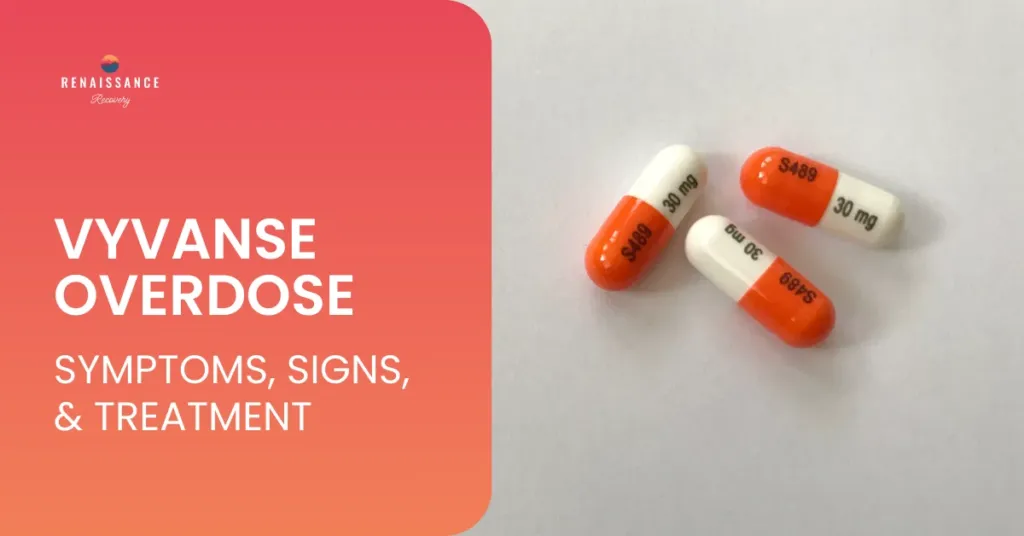
Why This Happens and Why It’s More Common Than You Think
Accidentally taking two Vyvanse doses on the same day is one of the most common medication errors among ADHD patients. ADHD itself impairs working memory — specifically the ability to remember whether you’ve already completed a routine action like taking your morning medication. You take your dose, go about your morning, forget you took it, and take it again.
It’s an ironic pattern: the condition that Vyvanse treats makes you more likely to accidentally double-dose. This is not a rare or careless mistake — it’s a predictable consequence of the condition. Understanding what to expect and what to do is critical information for anyone on Vyvanse.
What You Need to Know First
Vyvanse (lisdexamfetamine dimesylate) is a prodrug that converts into dextroamphetamine in your red blood cells. The daily maximum dose is 70 mg for all adults — there is no medically approved indication for exceeding this. When you take two doses, the combined dextroamphetamine release is additive — two 30 mg capsules produce the equivalent of a 60 mg dose; two 50 mg capsules produce the equivalent of a 100 mg dose, which is 30 mg above the maximum.
Critically, because Vyvanse is a prodrug that takes 90 minutes to 3 hours to reach peak blood levels, the full effect of the second dose may not arrive until well after you’ve taken it — meaning symptoms can build progressively over hours rather than all at once.
Quick Reference: How Serious Is It?
| Combined Dose | Risk Level | Recommended Action |
|---|---|---|
| Two × 30 mg = 60 mg | Within maximum range — amplified side effects likely | Monitor; call 13 11 26 if concerned |
| Two × 40 mg = 80 mg | Above maximum — medical overdose threshold | Call 13 11 26 immediately |
| Two × 50 mg = 100 mg | Significantly above maximum — urgent | Call 13 11 26; present to ED if symptomatic |
| Two × 60 mg = 120 mg | Medical emergency | Call 000 or present to emergency immediately |
| Two × 70 mg = 140 mg | Serious medical emergency | Call 000 immediately |
What Actually Happens to Your Body
When you take a second Vyvanse dose, your blood levels of dextroamphetamine climb significantly higher than they would on a single therapeutic dose. The consequences unfold across several body systems:
Central Nervous System
Dextroamphetamine at double the normal dose over-stimulates the prefrontal cortex and limbic system. You’ll likely feel excessively wired, restless, and unable to settle. Anxiety ramps up, thoughts may race, and emotional regulation — ironically — deteriorates significantly. Some patients describe intense agitation, a sense that they can’t slow down, or pressured speech (talking faster and more urgently than normal).
At higher double-dose combinations (120 mg and above), CNS toxicity symptoms can include confusion, hallucinations, and seizures.
Cardiovascular System
Heart rate and blood pressure rise in direct proportion to dextroamphetamine levels. At a double dose, most people experience noticeably elevated heart rate — potentially reaching 120–140 bpm or higher — along with chest tightness, palpitations, and elevated blood pressure. These effects are dose-dependent and peak 3–5 hours after the second dose is taken.
Cardiac complications — including arrhythmia — are the primary life-threatening risk of stimulant overdose, particularly in people with pre-existing heart conditions.
Body Temperature
High dextroamphetamine levels impair the body’s ability to regulate temperature, potentially causing hyperthermia (abnormally elevated body temperature). Excessive sweating, flushing, and feeling uncomfortably hot are early signs; severe hyperthermia is a medical emergency that can cause organ damage.
Gastrointestinal System
Nausea, stomach cramping, vomiting, and diarrhoea are common at elevated dextroamphetamine levels as the gut responds to the stimulant surge.
Sleep
A double dose — especially one taken late in the morning — means dextroamphetamine will still be active late into the night. Even a 30 mg dose taken at 7 AM produces effects until 7–9 PM; a second dose taken at 9 AM extends this window dramatically, potentially making sleep impossible before 2–4 AM.
The Delayed Risk: Why You Can’t Relax Immediately
One of the most important — and underappreciated — features of a Vyvanse double dose is that the danger doesn’t peak immediately. Because lisdexamfetamine takes 90 minutes to 3 hours to convert fully into dextroamphetamine, the full effect of the second dose arrives several hours after you took it.
This means you might feel relatively okay for the first hour or two after realising you’ve double-dosed — and then experience a significant worsening of symptoms 2–4 hours later as blood levels peak. Never assume you’re “in the clear” because symptoms are mild immediately after the mistake. Monitor closely for at least 4–6 hours.
What to Do Right Now: Step by Step
If you’ve just realised you’ve taken two Vyvanse doses, here’s exactly what to do:
Step 1: Stay calm. Panic and anxiety worsen cardiovascular strain. Breathe slowly and deliberately.
Step 2: Assess your total dose.
- If your combined dose is within the 70 mg maximum (e.g., two × 30 mg = 60 mg), this is a double dose but technically within range. Amplified side effects are likely but emergency risk is lower.
- If your combined dose exceeds 70 mg, you have exceeded the maximum recommended dose — this requires immediate contact with the Poisons Information Centre regardless of how you feel right now.
Step 3: Call the Australian Poisons Information Centre: 13 11 26.
This line is available 24 hours a day, 7 days a week across Australia. They will assess your specific dose, your weight, your medical history, and your current symptoms, and advise whether you need to present to an emergency department or can be monitored at home.
Step 4: Do not eat a large meal to “absorb” the drug. This is a common instinct but food does not neutralise dextroamphetamine already in your bloodstream.
Step 5: Stay well hydrated with water. Adequate hydration supports your kidneys in clearing the drug and helps manage hyperthermia risk.
Step 6: Move to a cool environment. Stimulant overdose impairs thermoregulation — stay in air-conditioned or cool spaces and avoid physical exertion.
Step 7: Do not take any other substances. Avoid caffeine, alcohol, and any other medication unless specifically advised by Poisons Control or emergency staff.
When to Call 000 Immediately
Some symptoms following a double dose require emergency services — do not wait:
- Chest pain, chest tightness, or irregular heartbeat
- Difficulty breathing
- Seizures or loss of consciousness
- Severe confusion or disorientation
- Hallucinations (seeing or hearing things that aren’t there)
- Uncontrollable shaking or tremors
- High fever or excessive body heat
- Severe headache with visual disturbance
Call 000 — Australia’s emergency number — for any of these symptoms. Do not drive yourself to the emergency department.
What to Expect if Symptoms Are Mild to Moderate
For many patients who accidentally double a lower dose (e.g., two × 30 mg = 60 mg), the experience is uncomfortable but not life-threatening. What to expect:
- Elevated heart rate — noticeable, potentially unsettling, but manageable if within 90–110 bpm
- Heightened anxiety or restlessness — difficulty sitting still, racing thoughts
- Dry mouth and jaw clenching — more intense than usual
- Appetite completely absent — expect no hunger for the entire day
- Insomnia — potentially lasting deep into the night; plan for a disrupted sleep
- Mild headache — as blood pressure elevation affects cranial vessels
- Emotionally reactive or irritable — as the overstimulation affects mood regulation
In this scenario, the principal management is: rest in a quiet, cool environment, stay hydrated, avoid further stimulants, and contact 13 11 26 for guidance.
The Important Prodrug Delay: Planning Your Night
Because Vyvanse is a prodrug, the peak effect of a second dose taken at, say, 9 AM arrives around 12 PM to 1 PM. A dose taken at 10 AM peaks around 1–2 PM. The tail end of the combined exposure may extend to midnight or beyond for higher double doses.
This has a practical implication: even if you feel the peak symptoms fading by early evening, sleep disruption is almost guaranteed on a double-dose day. Prepare for this:
- Do not lie in bed frustrated — this worsens anxiety
- Dim lights, reduce screen stimulation, and create a calm environment by 8–9 PM
- Do not take melatonin or any sedating supplement without speaking to a pharmacist or doctor — drug interactions when dextroamphetamine is still active are a concern
- If sleep is impossible, rest in a reclined position even without sleeping — your body is still doing recovery work
Does This Count as an Overdose?
Technically, yes — any dose above 70 mg per day is an overdose by the definition of the maximum recommended dose. However, the clinical significance of that overdose varies enormously based on your starting dose:
- Two × 30 mg (= 60 mg): Within the 70 mg ceiling — technically not above maximum, but still a double-dose error requiring monitoring
- Two × 40 mg (= 80 mg): 10 mg above maximum — a mild overdose warranting immediate medical contact
- Two × 50 mg (= 100 mg): A meaningful overdose; serious symptoms are probable and emergency evaluation is warranted if symptomatic
- Two × 70 mg (= 140 mg): A significant overdose; call 000 immediately regardless of current symptoms
The delayed peak effect means that even if you feel manageable right now at 60–80 mg combined, monitoring for at least 4–6 hours is critical.
What Not to Do
Several instinctive responses to a double dose are counterproductive or dangerous:
- Do not try to vomit unless specifically instructed by Poisons Control — this does not reliably help once absorption has begun and may worsen dehydration
- Do not drink alcohol to “calm down” — alcohol compounds cardiovascular strain and worsens dehydration
- Do not take sedatives (including over-the-counter sleep aids) without medical guidance — interactions with elevated dextroamphetamine levels are unpredictable
- Do not exercise or exert yourself — stimulant-elevated heart rate combined with physical exertion significantly increases cardiac risk
- Do not dismiss symptoms because they feel manageable early — the prodrug delay means the worst effects may still be hours away
How to Prevent This From Happening Again
Because the underlying cause of accidental double-dosing is often ADHD-driven memory failure, ordinary reminders frequently fail. These strategies are more reliable:
- Use a daily pill organiser — one compartment per day, visually confirming whether today’s dose has been taken
- Set a phone alarm labelled “Vyvanse — ALREADY TAKEN? CHECK BOX” as a dual function: reminder to take it and reminder to confirm you’ve taken it
- Keep your Vyvanse in a consistent single location — the act of moving it after taking it (e.g., from bedroom to bathroom) provides a physical confirmation cue
- Use a pill tracker app — several free apps allow you to tap “taken” each morning, creating a log
- Tell a household member who can serve as a secondary confirmation if you’re unsure
Safety and Important Considerations for Australian Patients
- The Australian Poisons Information Centre number is 13 11 26 — save it in your phone now, before you ever need it. It’s available 24/7 from anywhere in Australia
- Vyvanse is Schedule 8 — the accidental double dose must be reported to your prescriber at your next appointment. They need to know so they can assess whether your medication management plan needs adjustment
- Do not skip tomorrow’s dose to “balance out” the double dose today — your prescription requires prescriber guidance to alter
- Inform your pharmacist at your next dispensing if you believe you have a pattern of forgetting doses — they may be able to suggest practical packaging solutions
- The consumer medicine information for Vyvanse in Australia specifically states: “Do not take a double dose to make up for the dose you missed” — and this applies in reverse; accidentally doubling a dose should be addressed through medical contact, not self-management
Common Misconceptions About Taking Two Vyvanse
Myth 1: “Taking two lower-dose Vyvanse pills is safer than one high-dose pill.”
The pharmacological effect of two 35 mg doses is essentially identical to one 70 mg dose — your red blood cells produce the same amount of dextroamphetamine regardless of whether it came from one capsule or two. Splitting a high dose into two smaller ones doesn’t reduce risk; it just introduces uncertainty about timing and stacking.
Myth 2: “If I feel fine after an hour, the double dose isn’t going to cause problems.”
The delayed prodrug conversion means peak blood levels from the second dose are still 1–3 hours away when most people realise their mistake. Feeling okay initially is not reassurance. Monitor symptoms through the peak window (3–5 hours after the second dose) before concluding you’re in the clear.
Myth 3: “Drinking lots of water immediately will flush out the second dose.”
Water supports kidney clearance over hours, not minutes. It cannot prevent the second dose from being absorbed and converted — that process is largely complete by the time you’d be drinking the water. Staying hydrated is still useful for supporting clearance throughout the day, but it is not an emergency antidote.
- What happens if you take 2 Vyvanse in one day Hobart
- What happens if you take 2 Vyvanse in one day Devonport
- What happens if you take 2 Vyvanse in one day Launceston
- What happens if you take 2 Vyvanse in one day Tasmania
- What happens if you take 2 Vyvanse in one day Victoria
- What happens if you take 2 Vyvanse in one day Queensland
- What happens if you take 2 Vyvanse in one day Canberra
- What happens if you take 2 Vyvanse in one day Australian Capital Territory
- What happens if you take 2 Vyvanse in one day South Australia
- What happens if you take 2 Vyvanse in one day New South Wales
- What happens if you take 2 Vyvanse in one day Darwin
- What happens if you take 2 Vyvanse in one day Ghan
- What happens if you take 2 Vyvanse in one day Northern Territory
- What happens if you take 2 Vyvanse in one day Australia
- What happens if you take 2 Vyvanse in one day Austria
- What happens if you take 2 Vyvanse in one day Germany
- What happens if you take 2 Vyvanse in one day United Kingdom
- What happens if you take 2 Vyvanse in one day Sweden
- What happens if you take 2 Vyvanse in one day Denmark
- What happens if you take 2 Vyvanse in one day Norway
- What happens if you take 2 Vyvanse in one day Finland
- What happens if you take 2 Vyvanse in one day Iceland
- What happens if you take 2 Vyvanse in one day Netherlands
- What happens if you take 2 Vyvanse in one day Spain
- What happens if you take 2 Vyvanse in one day Ireland
- What happens if you take 2 Vyvanse in one day Switzerland
FAQ: People Also Ask About Taking Two Vyvanse in One Day
Is it dangerous to take two Vyvanse capsules in one day?
It depends on your dose. Two × 30 mg = 60 mg, which is within the 70 mg maximum — still a double-dose error worth monitoring and reporting, but lower risk. Two × 50 mg = 100 mg, which is a significant overdose requiring immediate contact with the Poisons Information Centre on 13 11 26. Two × 70 mg = 140 mg — call 000 immediately regardless of how you feel.
What should I do if I accidentally took Vyvanse twice today?
Call the Australian Poisons Information Centre immediately on 13 11 26 — available 24/7. They will assess your combined dose, your symptoms, and your medical history, and advise whether you need emergency care or can monitor at home. Do not wait to see if symptoms worsen before calling. Stay in a cool environment, drink water, and avoid caffeine and alcohol.
How long will the effects of a double Vyvanse dose last?
A double dose extends the active window significantly. If you took your first dose at 7 AM and second at 9 AM, you may still feel significant effects at 10–11 PM or later, depending on your total combined dose. Sleep disruption is virtually guaranteed. The peak of the combined exposure typically arrives 3–5 hours after the second dose and tapers progressively after that.
Can taking two Vyvanse cause a heart attack?
Severe stimulant overdose can cause life-threatening cardiac events, including arrhythmia and — in rare cases — myocardial infarction, particularly in people with pre-existing cardiovascular conditions. At lower double-dose amounts (e.g., 60 mg), the cardiac risk is elevated but not typically catastrophic in healthy adults with no cardiac history. At higher amounts (120–140 mg), cardiac risk is serious and requires emergency medical evaluation.
Should I skip tomorrow’s Vyvanse dose after accidentally doubling today?
Do not alter your dosing schedule without prescriber guidance. For most people, returning to your normal dose the next day is appropriate — your body will have cleared most of the previous day’s excess within 12–18 hours. However, if you experienced significant cardiac symptoms, extreme anxiety, or were directed to seek medical care, check with your prescriber or pharmacist before resuming.
What if I took two Vyvanse on purpose — is that more dangerous?
Intentionally taking above your prescribed dose — whether to “boost” effectiveness or for non-medical reasons — carries the same pharmacological risks as an accidental double dose, plus additional concerns about dependence development and the legal implications of misusing a Schedule 8 controlled substance. If you find yourself taking more than prescribed regularly, this warrants an honest conversation with your prescribing psychiatrist about whether your current dose is adequate or whether a different treatment approach is needed.
Will one accidental double dose cause lasting damage?
A single accidental double dose at the lower end (60–80 mg) is extremely unlikely to cause lasting physical damage in a healthy adult with no cardiac conditions. The body metabolises dextroamphetamine within 48–60 hours and returns to baseline. Higher double doses carry greater risk, and anyone who experienced significant cardiac symptoms should follow up with their doctor for a cardiovascular check regardless of feeling recovered.
